
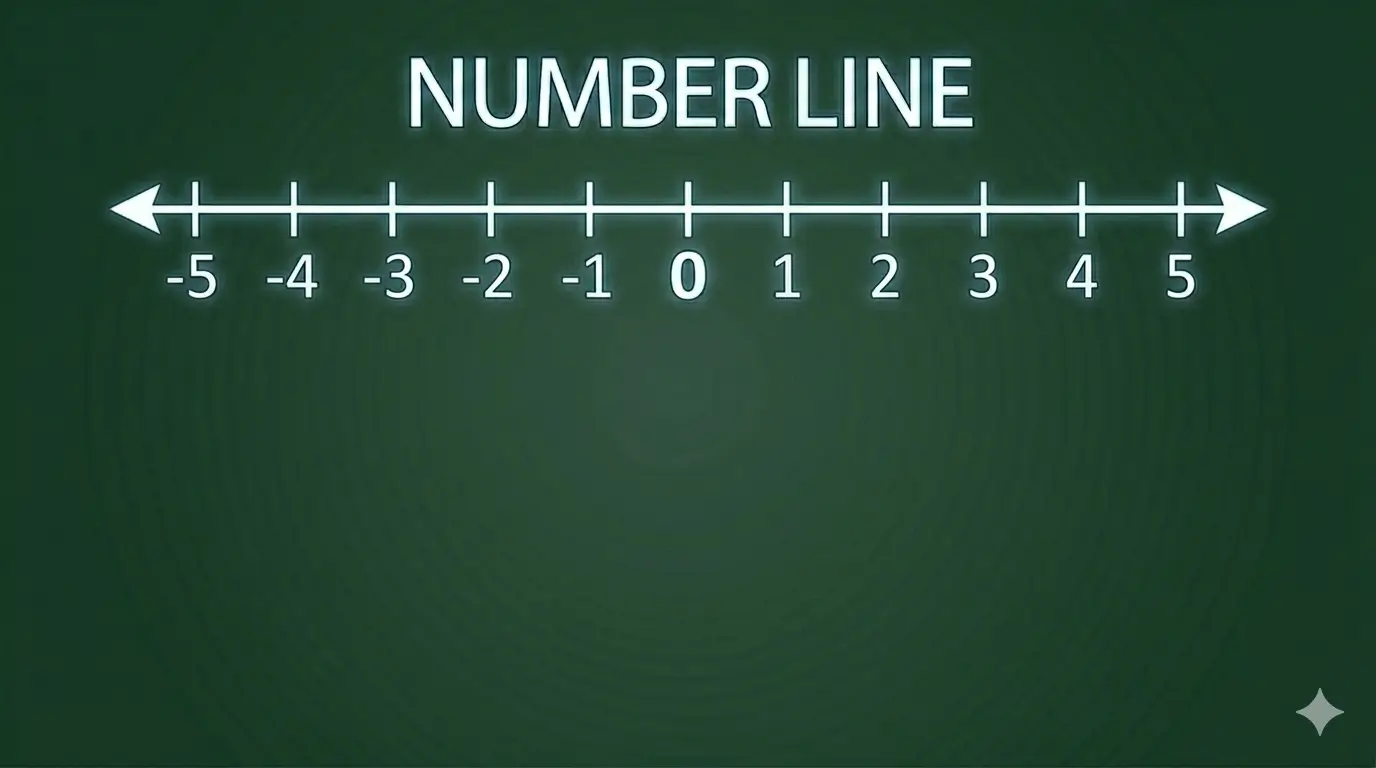

A number line is one of the most important visual tools in mathematics. It is a straight line on which numbers are marked at equal intervals. It helps us understand the order, value, comparison, and operations of numbers in a simple and visual way.
A number line begins with the idea that every number has a fixed position. Smaller numbers are placed on the left side, and greater numbers are placed on the right side. The number line helps students visualize many mathematical concepts such as natural numbers, whole numbers, integers, fractions, decimals, rational numbers, irrational numbers, real numbers, addition, subtraction, multiplication, division, distance, direction, and coordinate geometry.
A number line is not just a drawing. It is a bridge between numbers and geometry. It shows that numbers have size, order, distance, and position. It also helps us understand that numbers are continuous. There is no gap in the real number line because between any two numbers, more numbers always exist. This makes the number line a powerful mathematical tool from basic arithmetic to advanced mathematics.
Meaning of Number Line
A number line is a straight horizontal line on which numbers are represented by points. Each marked point represents a number. The numbers increase as we move from left to right and decrease as we move from right to left.
Basic Features of a Number Line
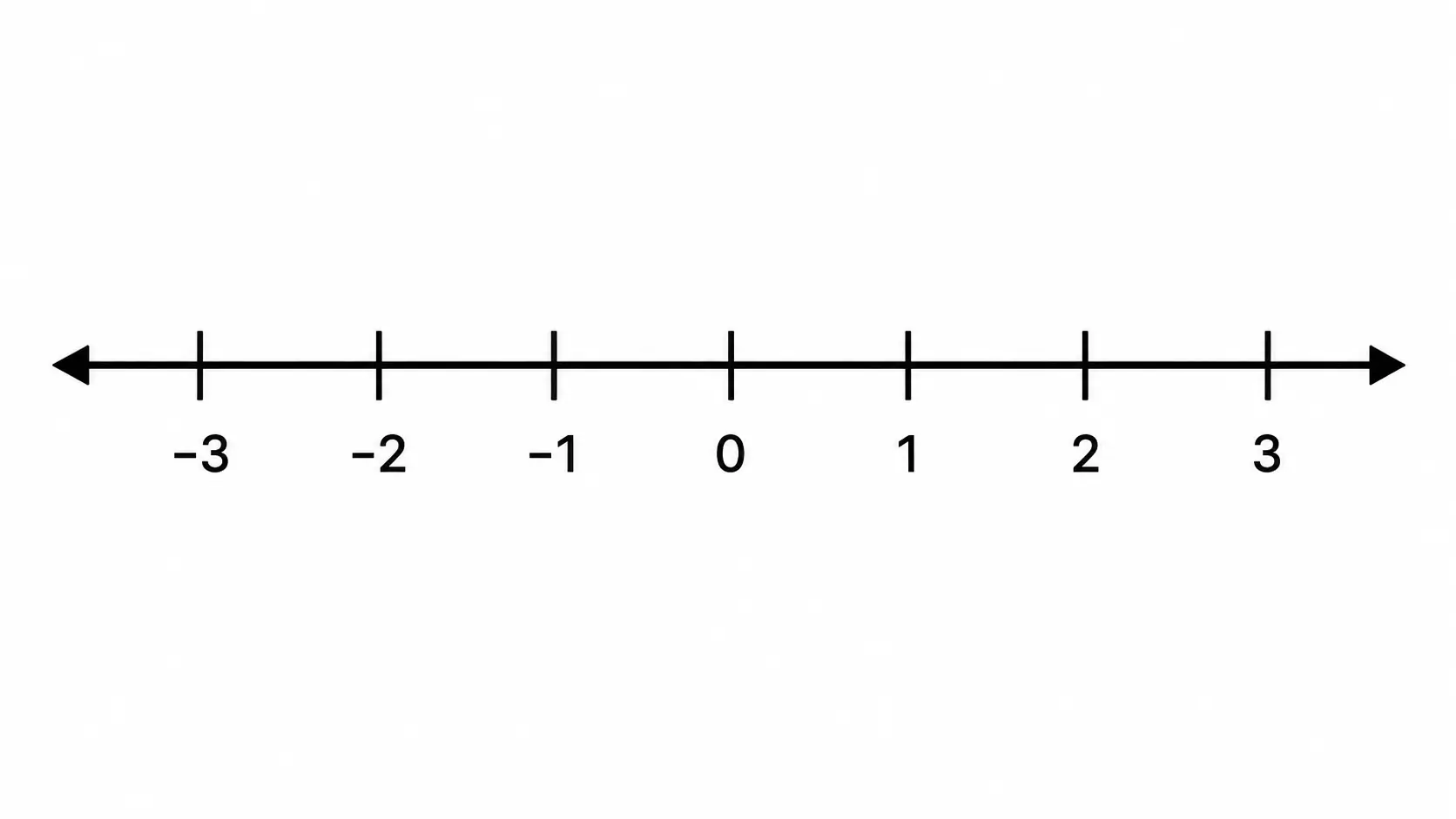
A number line has the following features:
- It is a straight line.
- It extends endlessly in both directions.
- It has arrows on both ends to show that numbers continue forever.
- Zero is usually placed in the middle.
- Positive numbers are placed to the right of zero.
- Negative numbers are placed to the left of zero.
- Equal gaps represent equal differences between numbers.
Comparing Numbers Using a Number Line
A number line helps us compare numbers.
Rule:
The number on the right is always greater than the number on the left.
Here:
- 3 is greater than 2.
- 1 is greater than -1.
- -1 is greater than -3.
- -3 is smaller than 0.
- So:
- 3 > 2
1 > -1
-1 > -3
-3 < 0
- 3 > 2
Absolute Value on the Number Line
The absolute value of a number is its distance from zero on the number line.
It is written using vertical bars.
Examples:
|5| = 5
|-5| = 5
|0| = 0
Explanation:
Both 5 and -5 are 5 units away from zero.
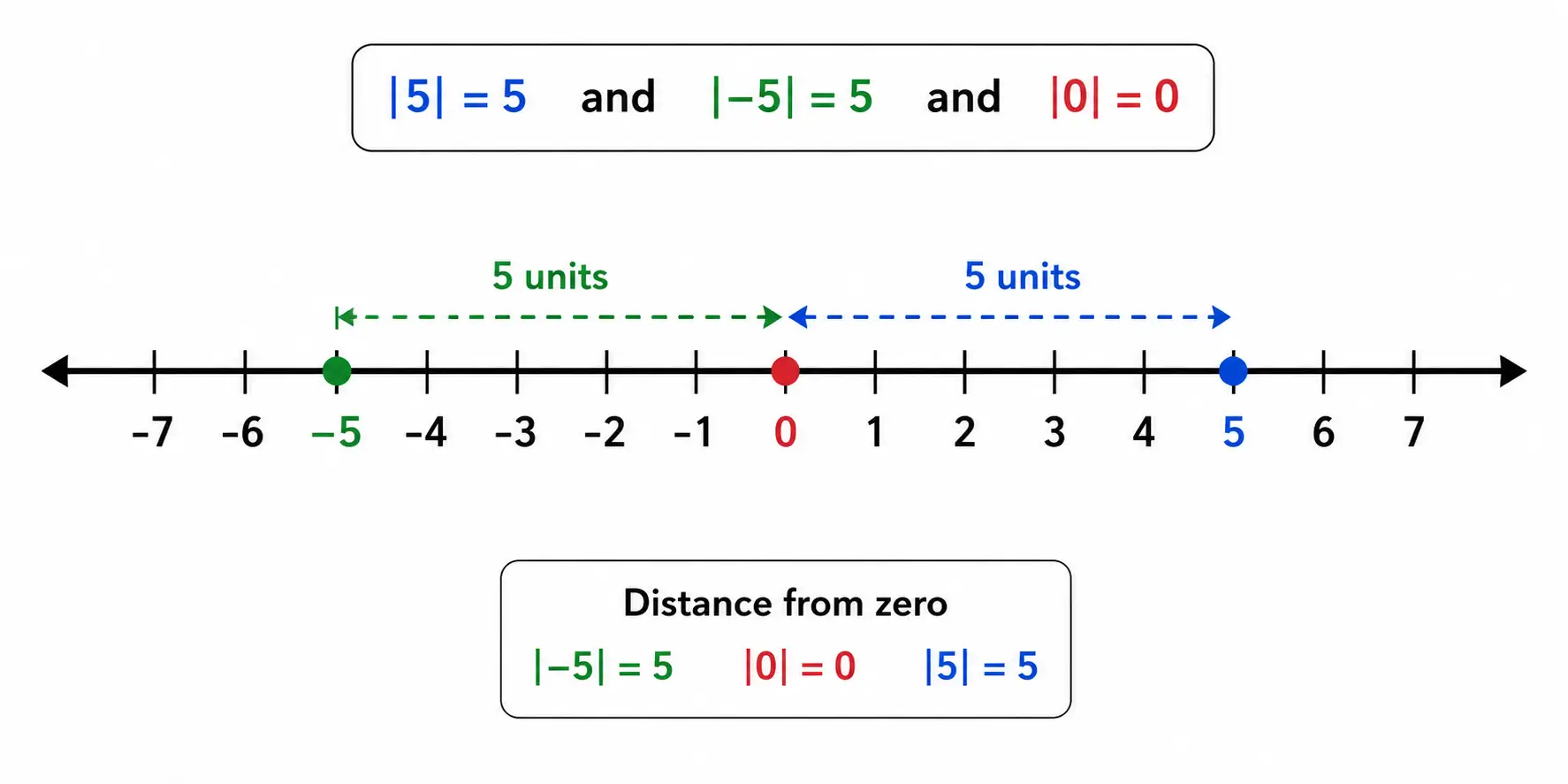
Distance is always positive, so absolute value is never negative.
Opposite Numbers on the Number Line
Two numbers are called opposite numbers if they are at the same distance from zero but on opposite sides.
Examples:
3 and -3
5 and -5
8 and -8
On the number line, 3 and -3 are equally distant from zero.
The opposite of 7 is -7
The opposite of -9 is 9
Addition on the Number Line
Addition means moving to the right on the number line.
Example: 3+2=5
Start at 3 and move 2 steps to the right.
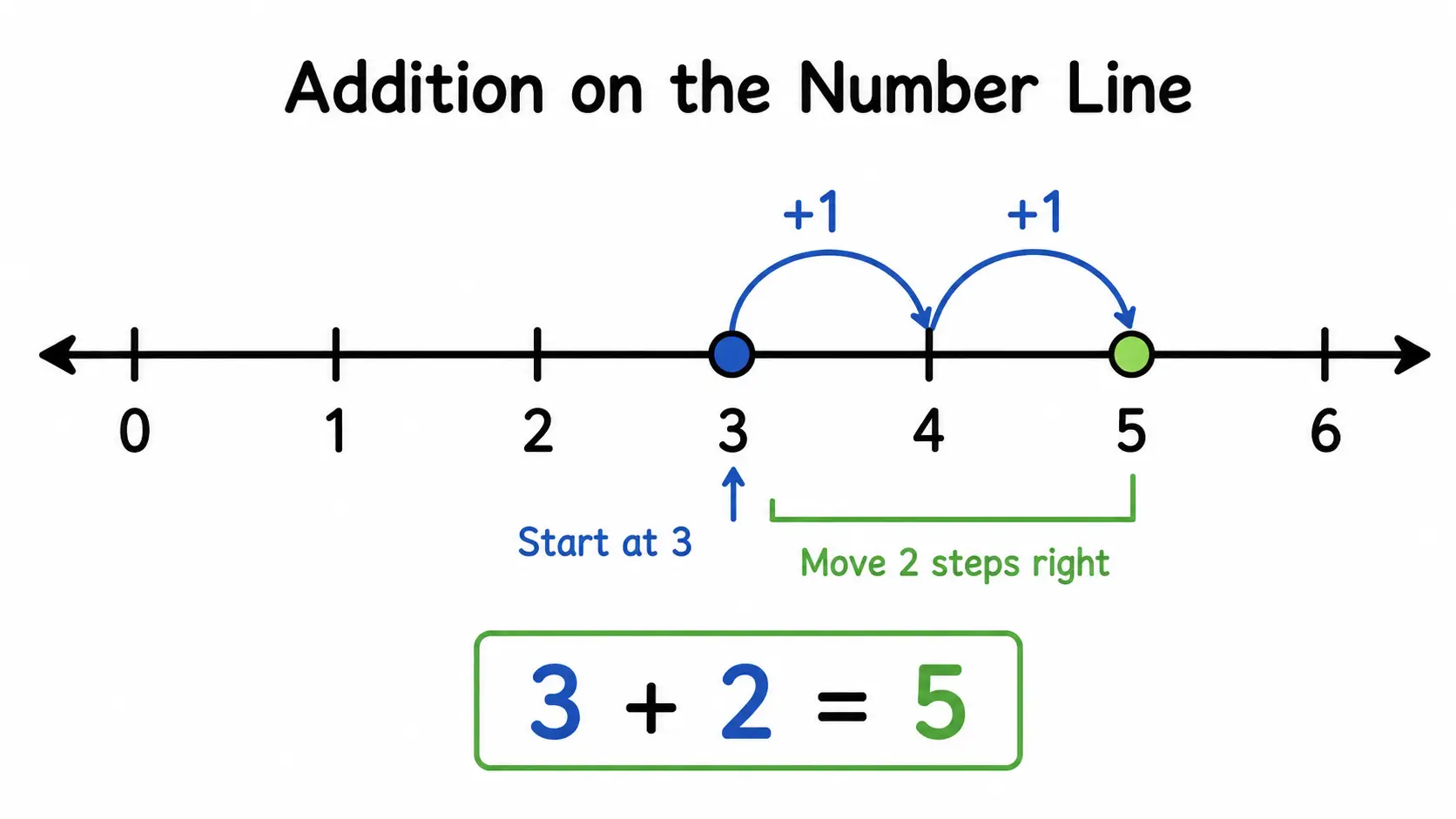
So, 3 + 2 = 5
Addition of a Negative Number
Adding a negative number means moving to the left.
Example: 3+(-2) = 1
Start at 3 and move 2 steps to the left.
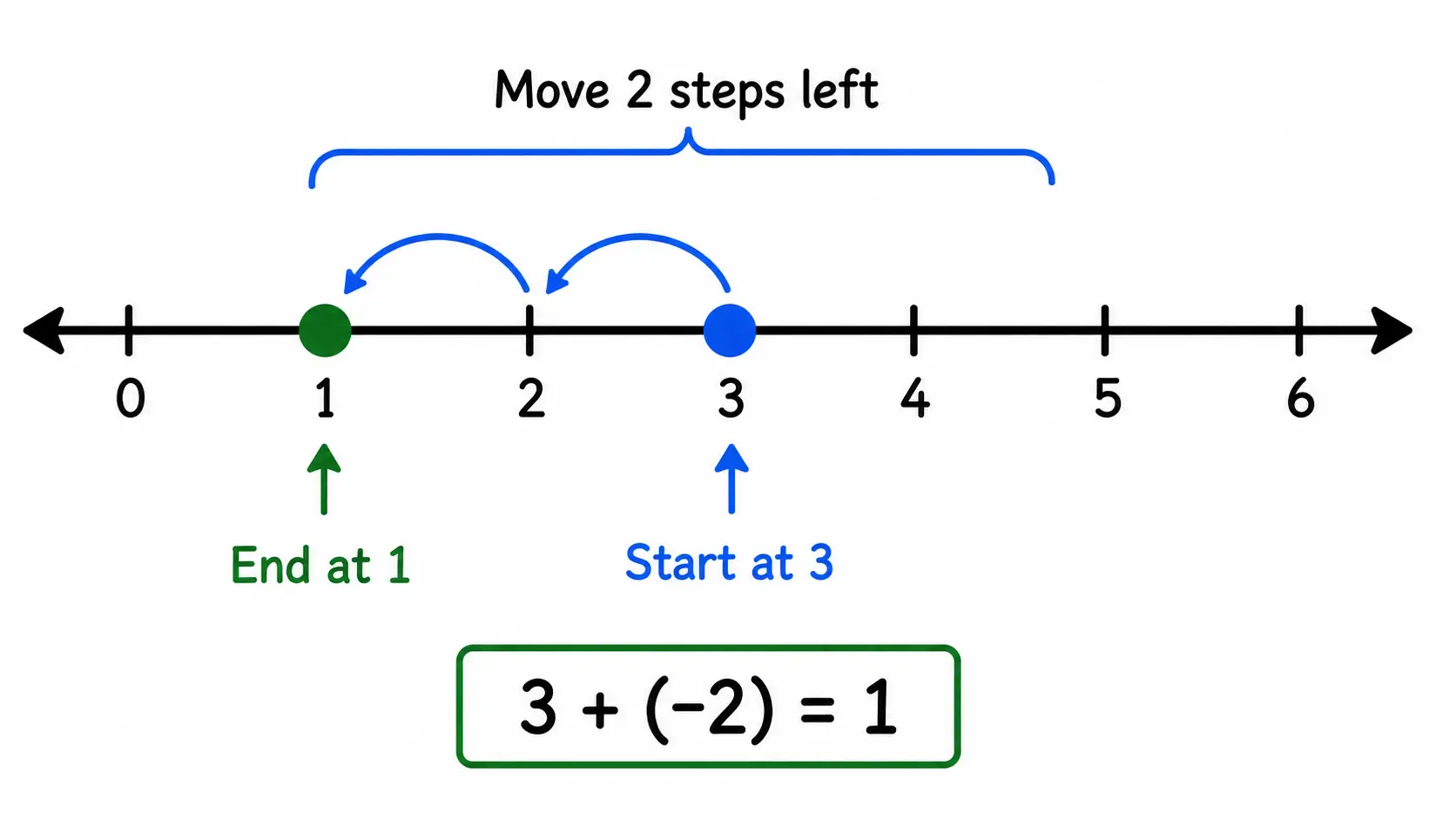
So, 3 + (-2) = 1
Subtraction on the Number Line
Subtraction means moving to the left on the number line.
Example: 5-2 = 3
Start at 5 and move 2 steps to the left.
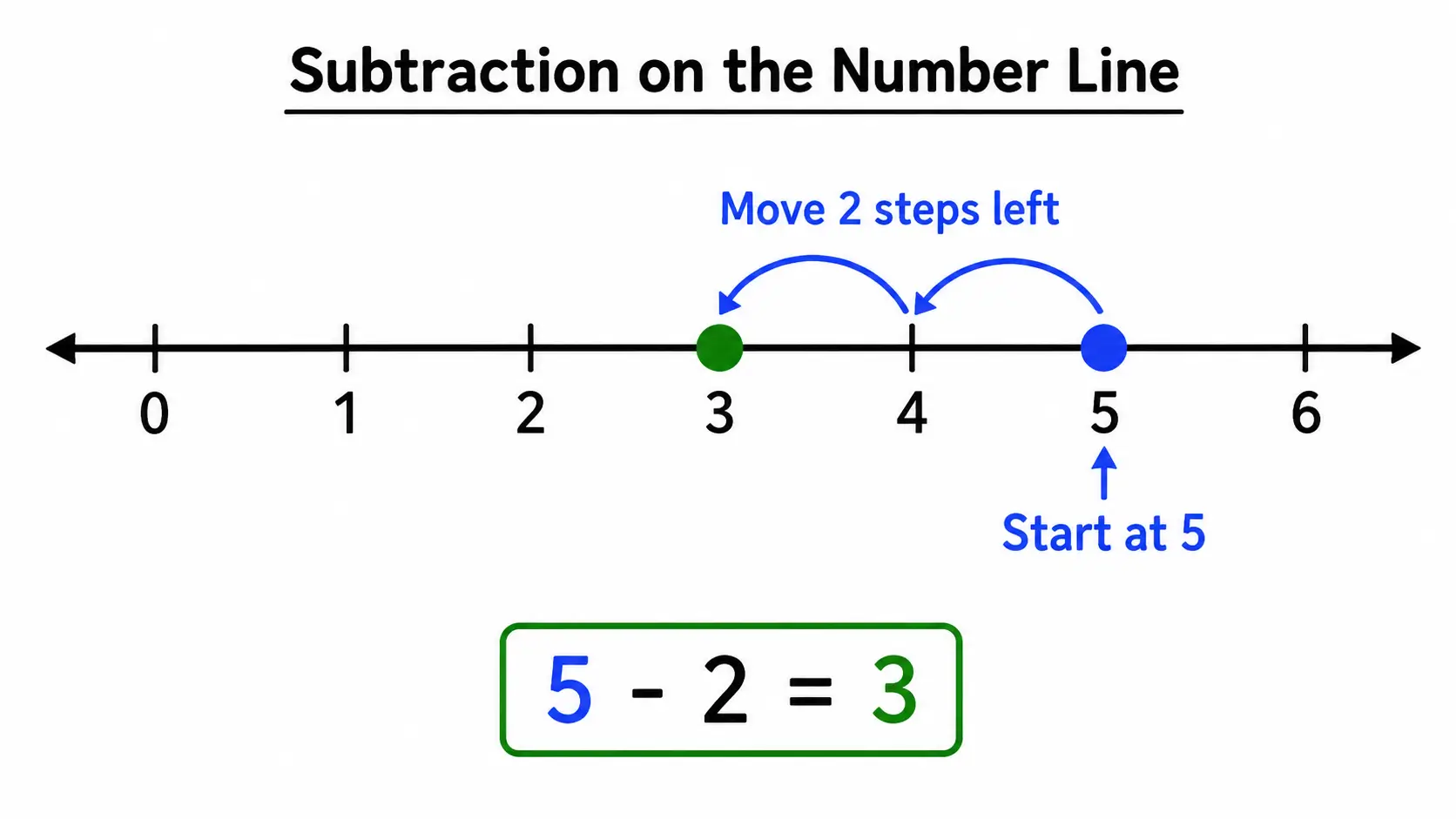
So, 5 – 2 = 3
Subtracting a Negative Number
Subtracting a negative number means moving to the right.
Example: 2-(-3) = 5
This becomes 2+3 = 5
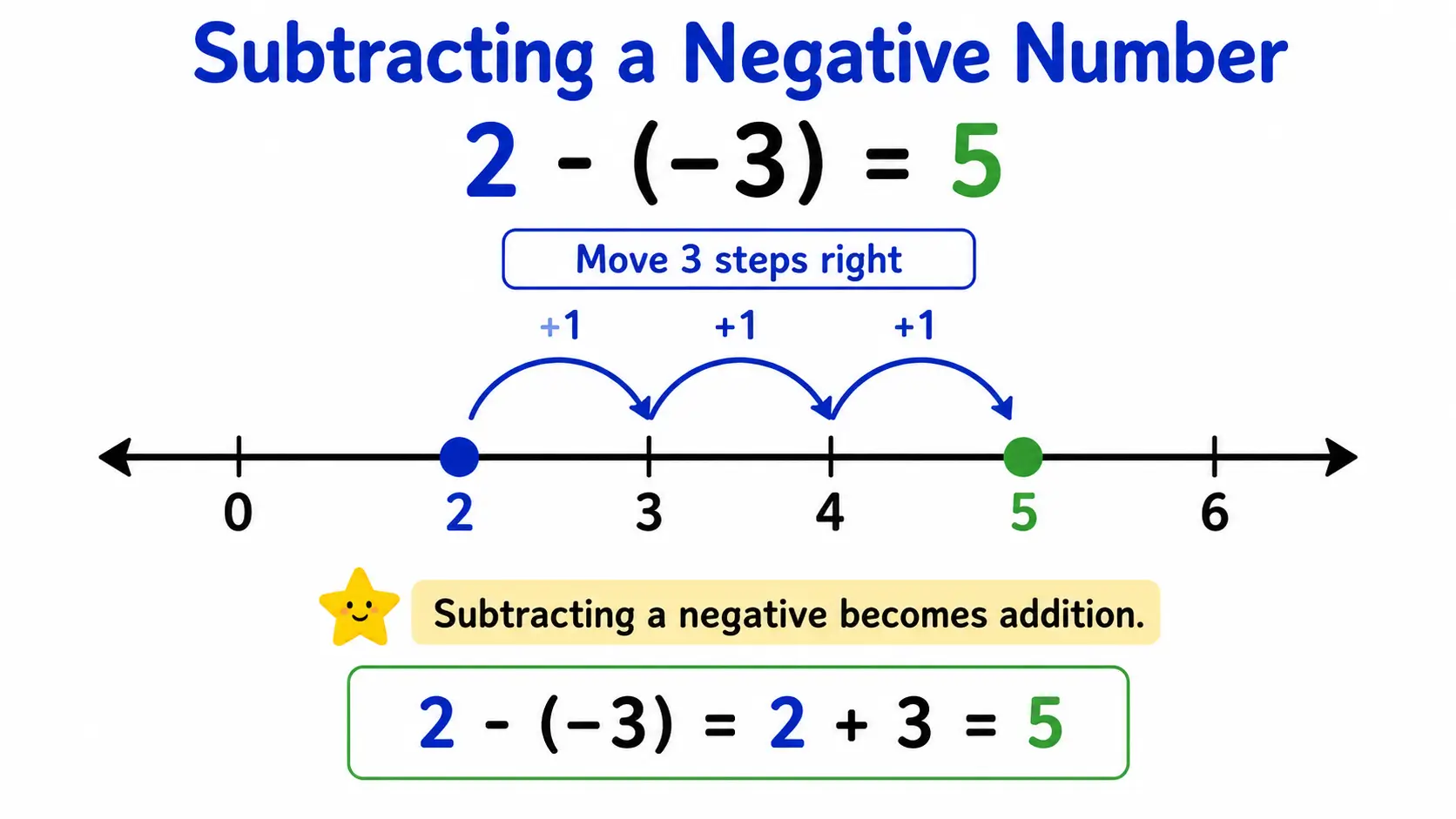
Start at 2 and move 3 steps to the right.
So, 2 – (-3) = 5.
Multiplication on the Number Line
Multiplication can be shown as repeated jumps on the number line.
Example : 3 × 4 = 12
This means 3 jumps of 4 units each.
0 → 4 → 8 → 12
So, 3 × 4 = 12.
Another example:
4 × 2 = 8
This means 4 jumps of 2 units each.
0 → 2 → 4 → 6 → 8
So, 4 × 2 = 8.
Division on the Number Line
Division can be shown by equal jumps or equal groups.
Example:
12 ÷ 3 = 4
This means we make jumps of 3 from 0 to 12.
0 → 3 → 6 → 9 → 12
There are 4 jumps.
So, 12 ÷ 3 = 4.
Fractions on the Number Line
Fractions can also be represented on a number line.
A fraction represents a part of a whole.
Example:
Represent 1/2 on the number line.
Divide the space between 0 and 1 into 2 equal parts.
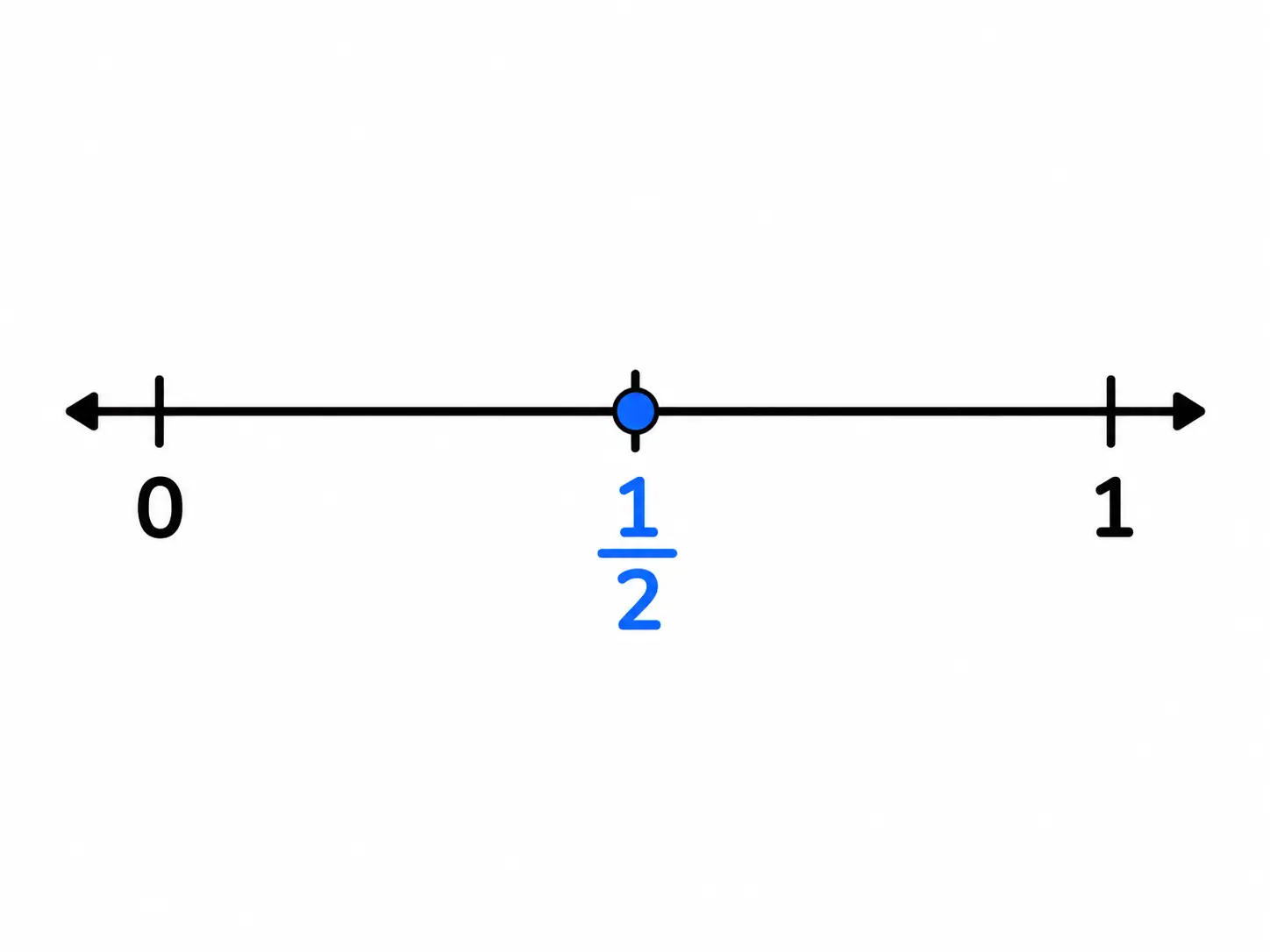
So, 1/2 lies exactly between 0 and 1.
Example:
Represent 3/4 on the number line.
Divide the space between 0 and 1 into 4 equal parts.
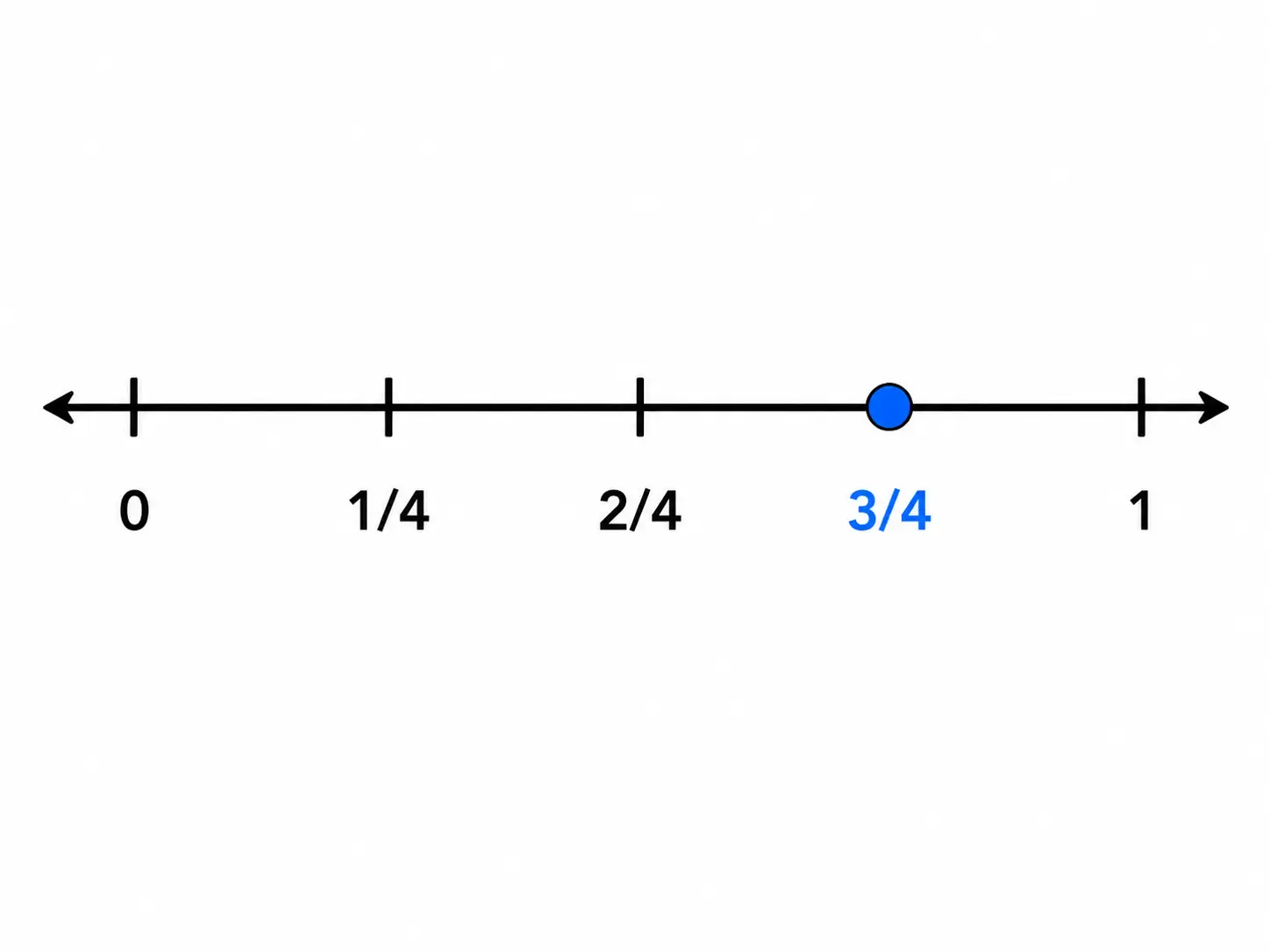
Here, 3/4 is the third point after 0
Proper Fractions on the Number Line
Proper fractions lie between 0 and 1.
Examples: 1/2, 2/3, 3/4, 4/5
Improper Fractions on the Number Line
An improper fraction is greater than or equal to 1.
Examples: 5/4, 7/3, 9/2
To represent an improper fraction, first convert it into a mixed number.
Example: 5⁄4 = 1 1⁄4So, 5/4 lies between 1 and 2.
Mixed Numbers on the Number Line
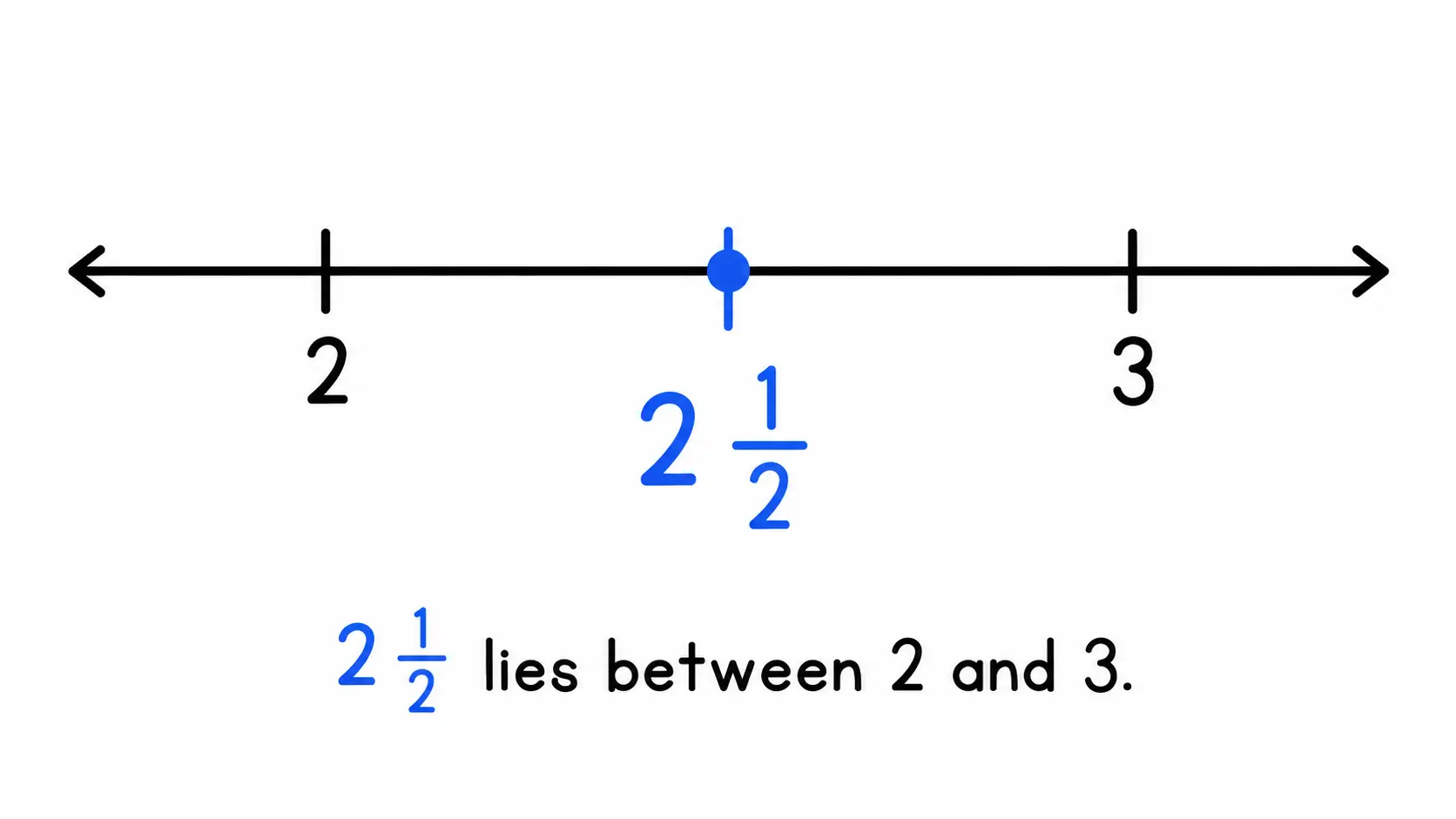
A mixed number has a whole number part and a fractional part.
2 1⁄2It can be written as 2 + 1/2
This number lies between 2 and 3.
Equivalent Fractions on the Number Line
Equivalent fractions represent the same point on the number line.
Examples:
1/2 = 2/4 = 3/6 = 4/8
All these fractions lie at the same position.
This shows that different fractions can have the same value.
Decimals on the Number Line
Decimals can also be represented on a number line.
Example:
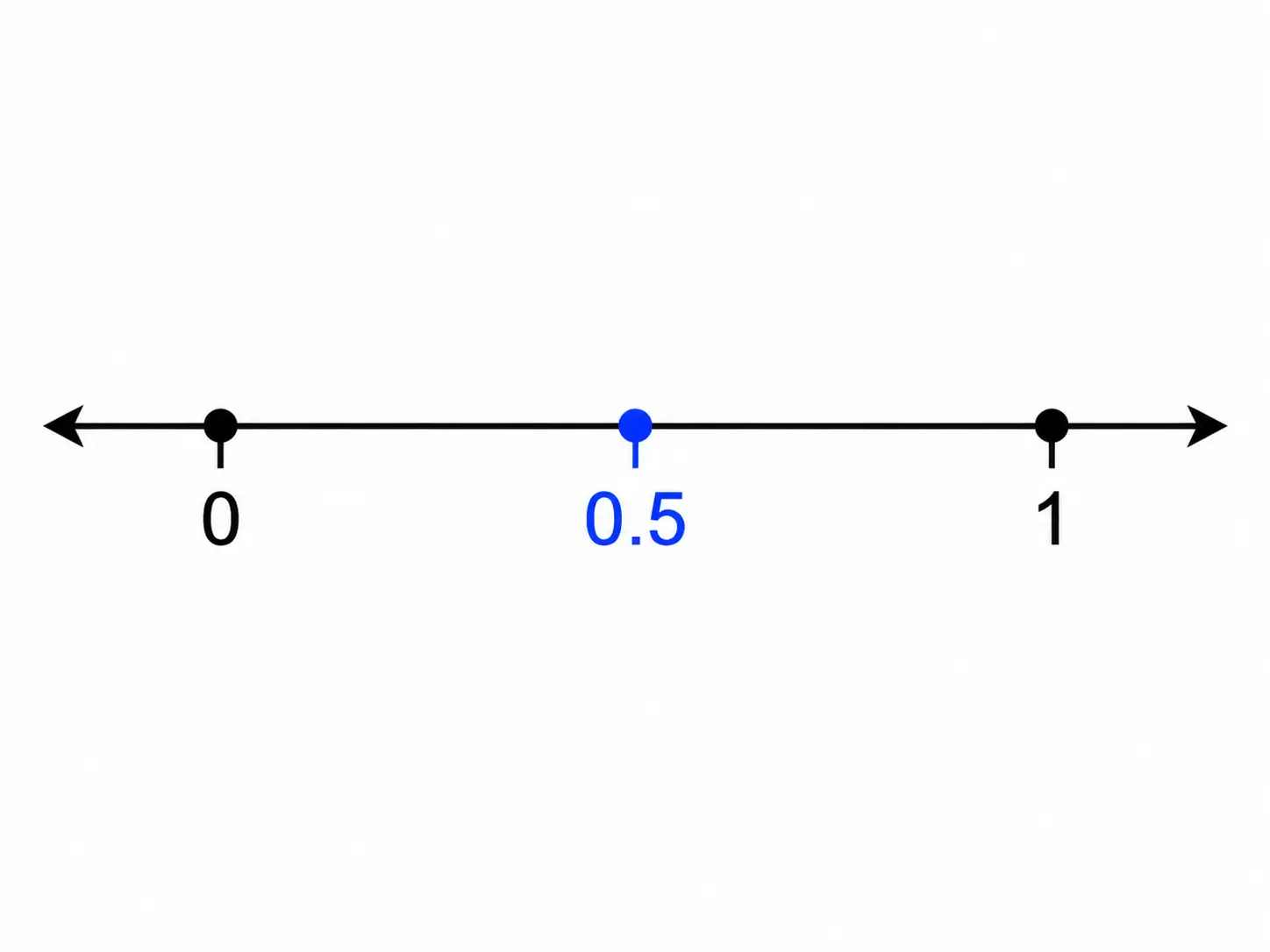
Represent 0.5.
Since 0.5 = 1/2, it lies exactly between 0 and 1.
Example:
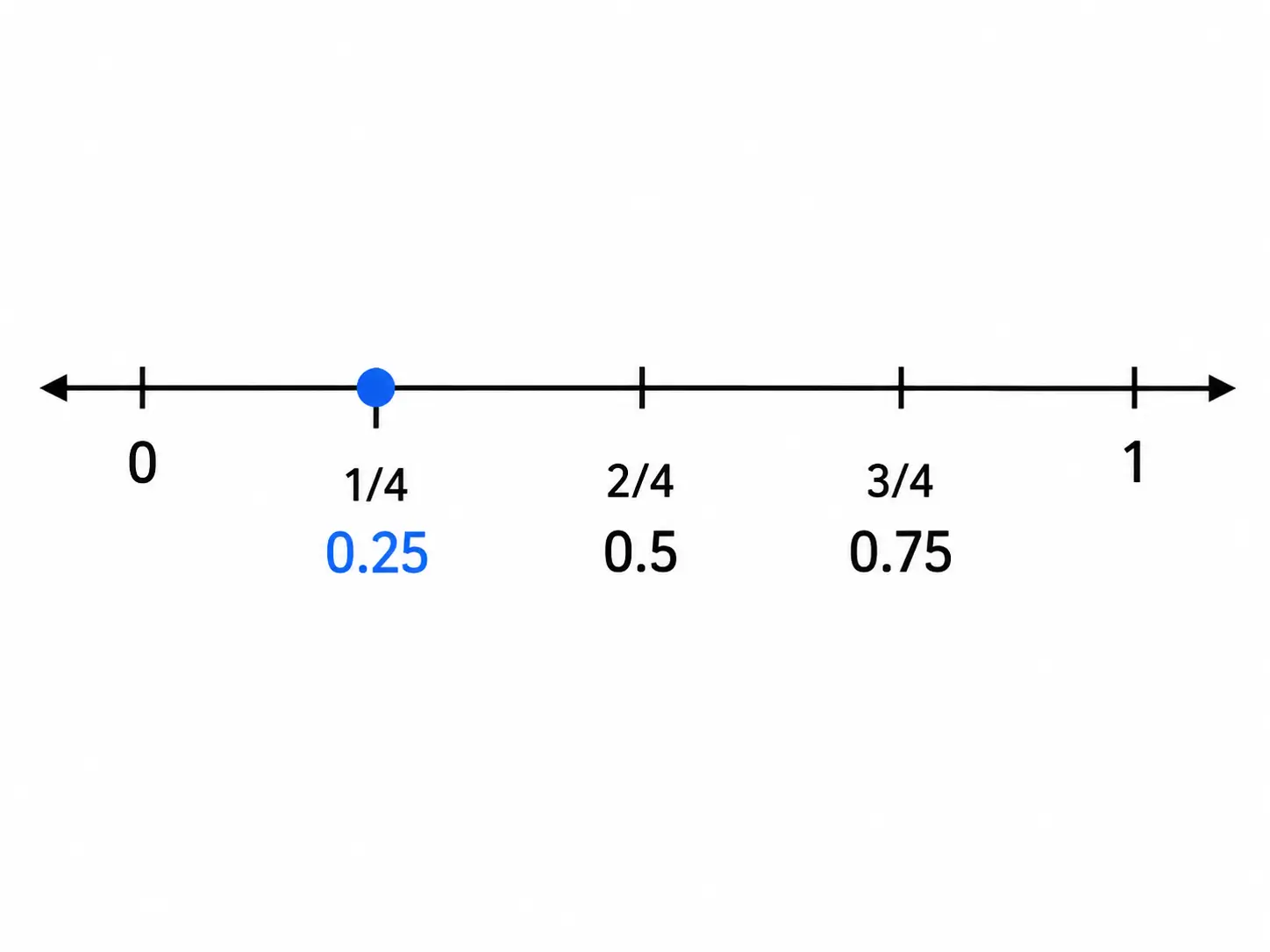
Represent 0.25.
Since 0.25 = 1/4, it lies one-fourth of the way between 0 and 1.
Rational Numbers on the Number Line
A rational number is a number that can be written in the form: p/q where p and q are integers and q is not equal to zero.
Examples: 1/2, -3/4, 5, 0, 2.5, -1.25
All rational numbers can be represented on a number line.
-1/2 lies between -1 and 0.
3/2 lies between 1 and 2.
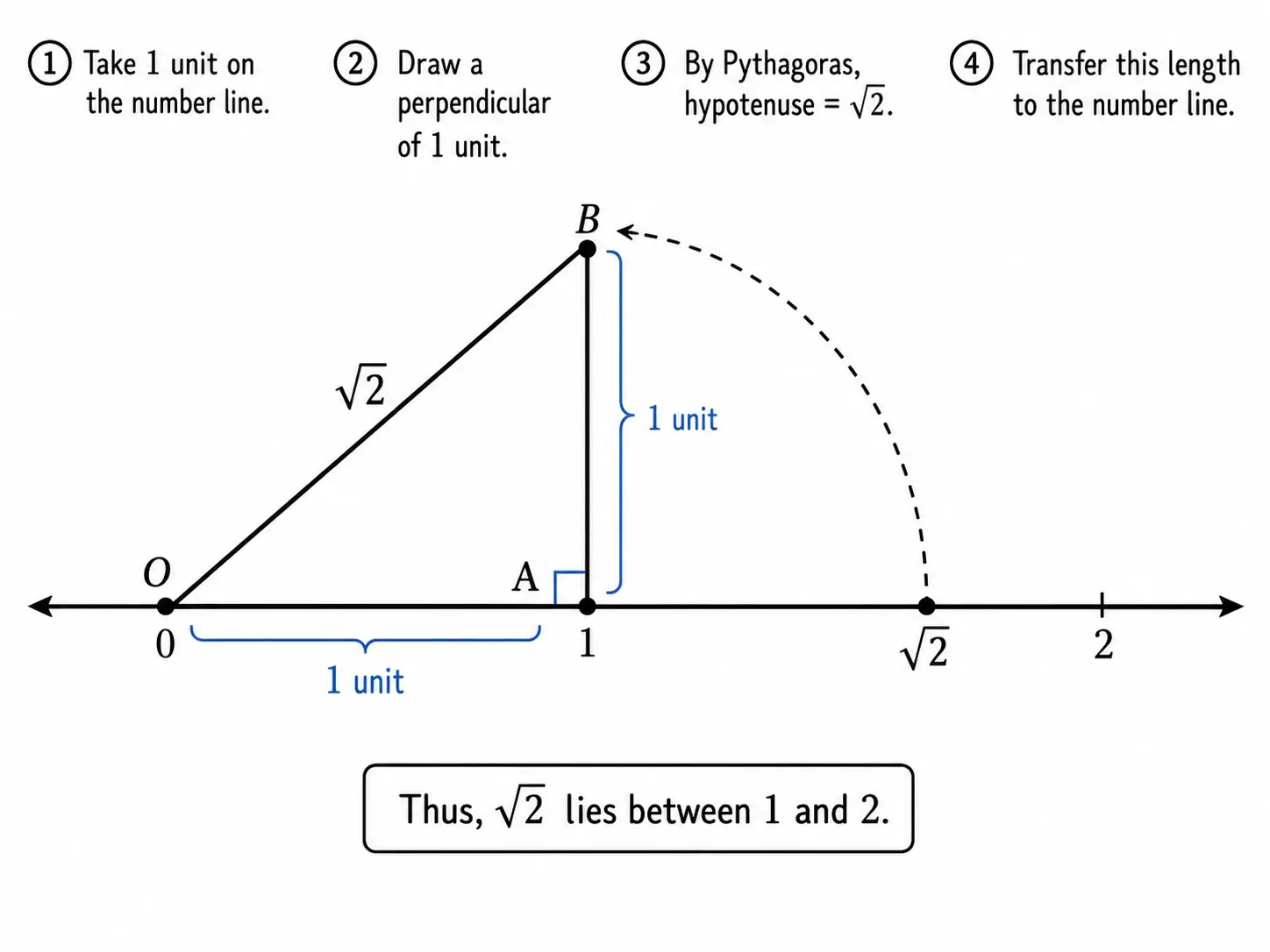
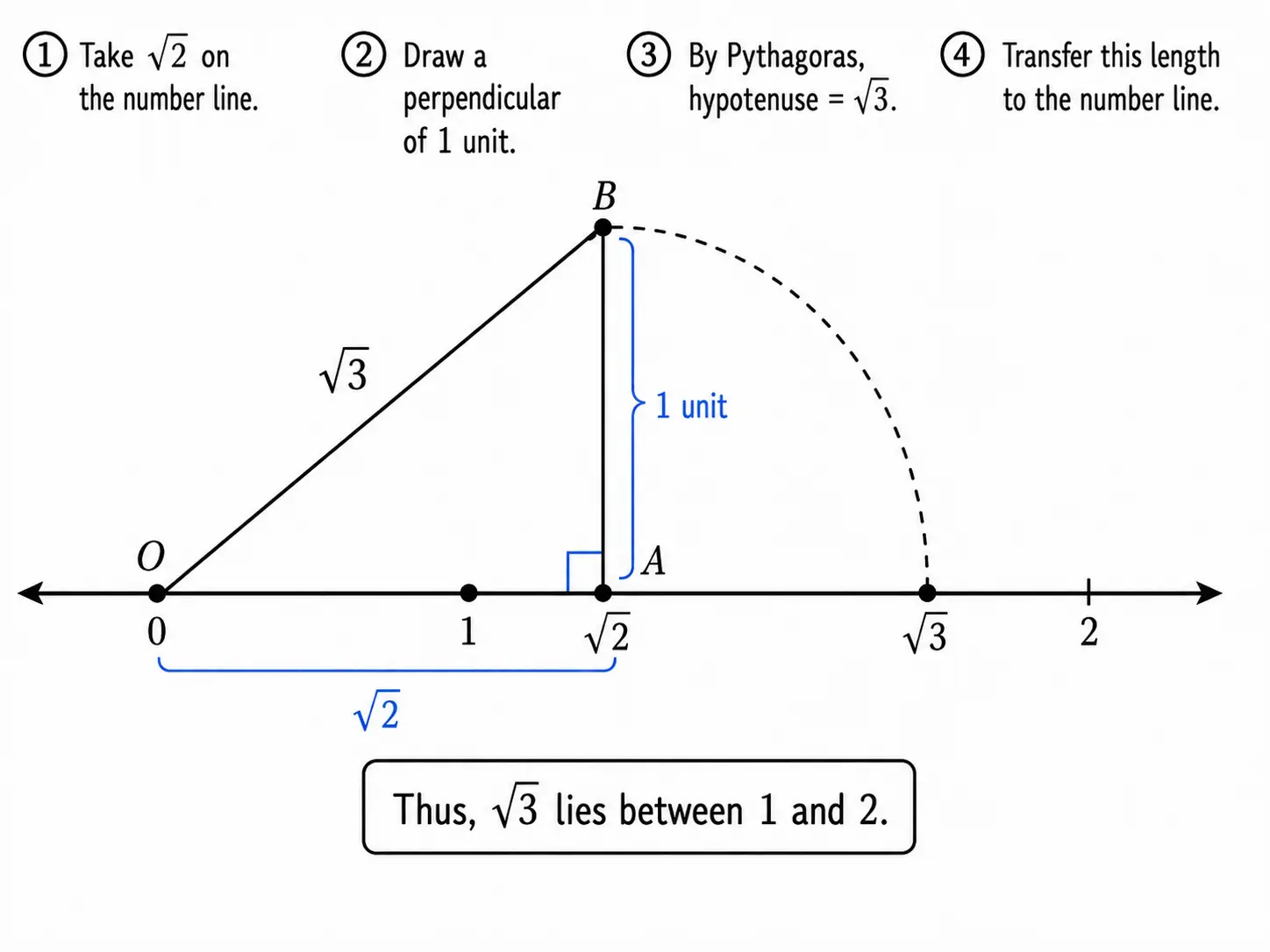
Irrational Numbers on the Number Line
Irrational numbers cannot be written in the form p/q.
Examples: √2, √3, π
They have non-terminating and non-repeating decimal expansions.
Example: √2 = 1.414213…
So, √2 lies between 1 and 2 on the number line.
Real Numbers on the Number Line
All rational and irrational numbers together are called real numbers. Every point on the number line represents a real number and every real number has a point on the number line.
So, the number line is also called the real number line.
Distance Between Two Numbers
The distance between two numbers is the number of units between them on the number line.
Example:
Find the distance between 2 and 7.
7 – 2 = 5
So, the distance is 5 units.
Example:
Find the distance between -3 and 4.
4 – (-3) = 7
So, the distance is 7 units.
Distance is always positive.
Midpoint on the Number Line
The midpoint is the point exactly between two numbers.
Formula : (a+b)/2
Example:
Find the midpoint of 2 and 8.
Midpoint = (2 + 8) / 2
Midpoint = 10 / 2
Midpoint = 5
So, 5 is the midpoint.
Example:
Find the midpoint of -4 and 6.
So, 1 is the midpoint.
Open Circle and Closed Circle
On a number line:
An open circle means the number is not included.
Example: x > 2
2 is not included.
A closed circle means the number is included.
Example: x ≥ 2
2 is included.
Number Line and Inequalities
A number line is very useful for representing inequalities.
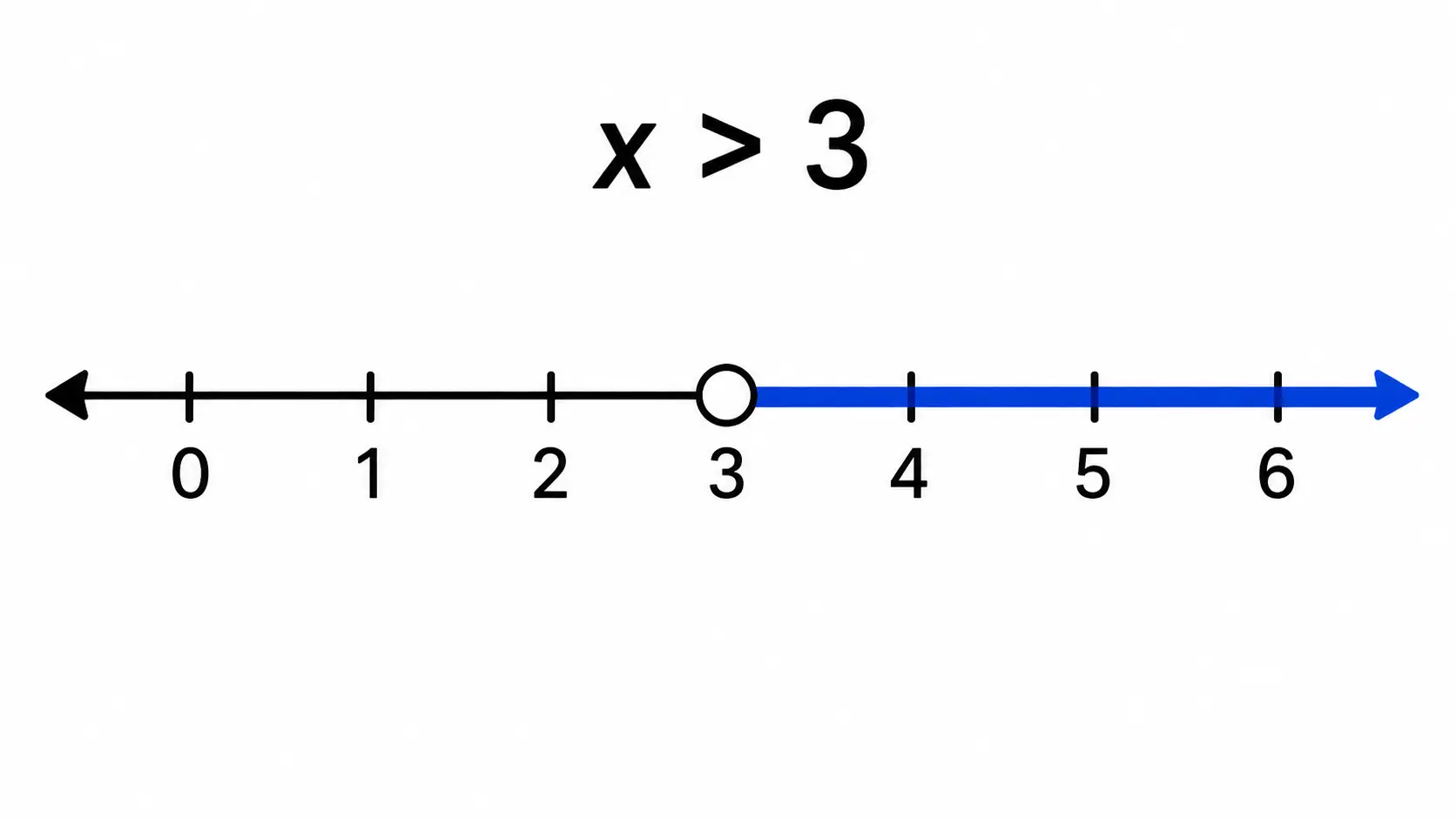
Example: x > 3
This means x can be any number greater than 3.
On the number line, we use an open circle at 3 and shade to the right.
Example: x ≥ 3
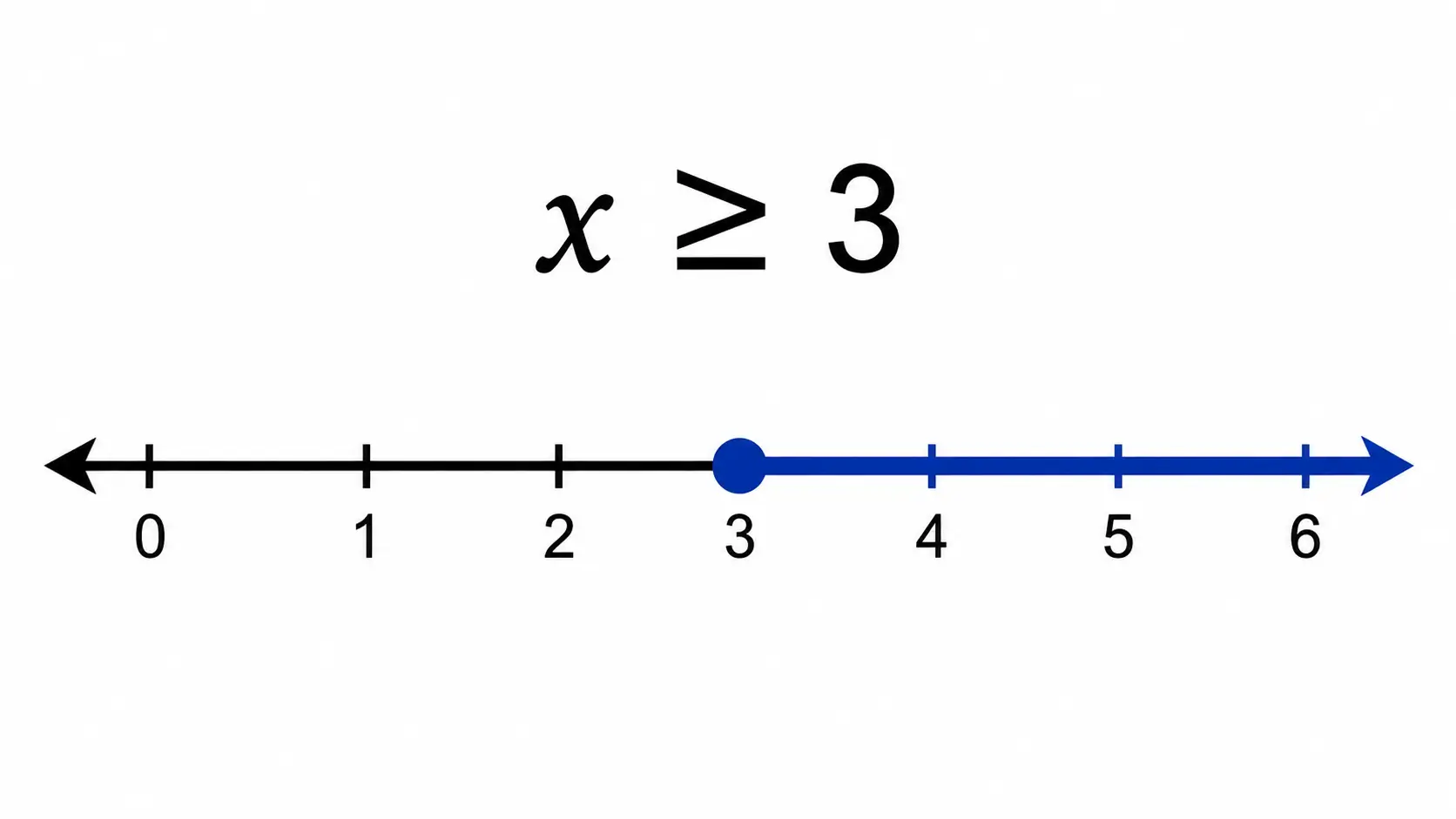
This means x can be 3 or any number greater than 3.
We use a closed circle at 3 and shade to the right.
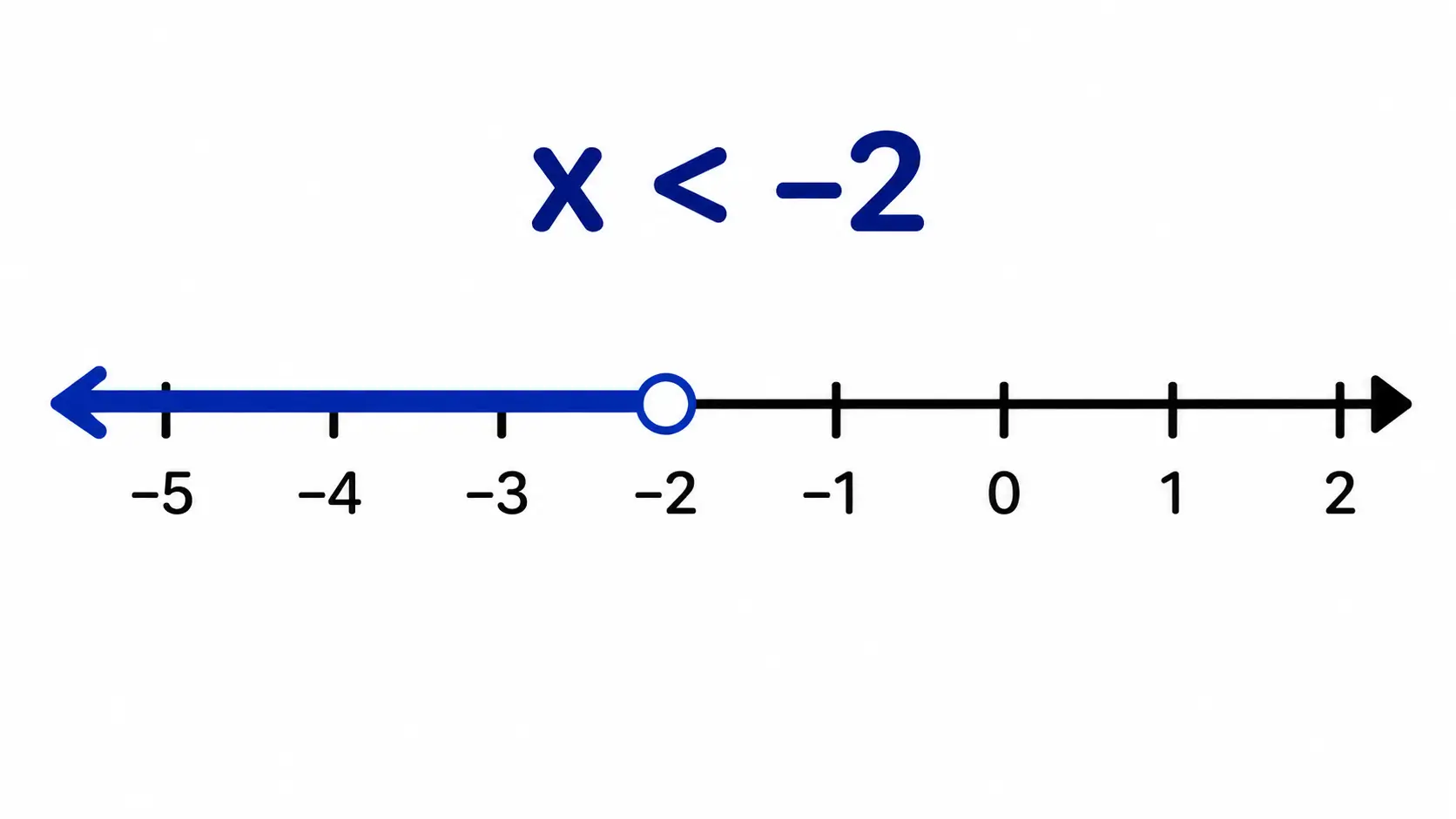
Example: x < -2
This means x can be any number less than -2.
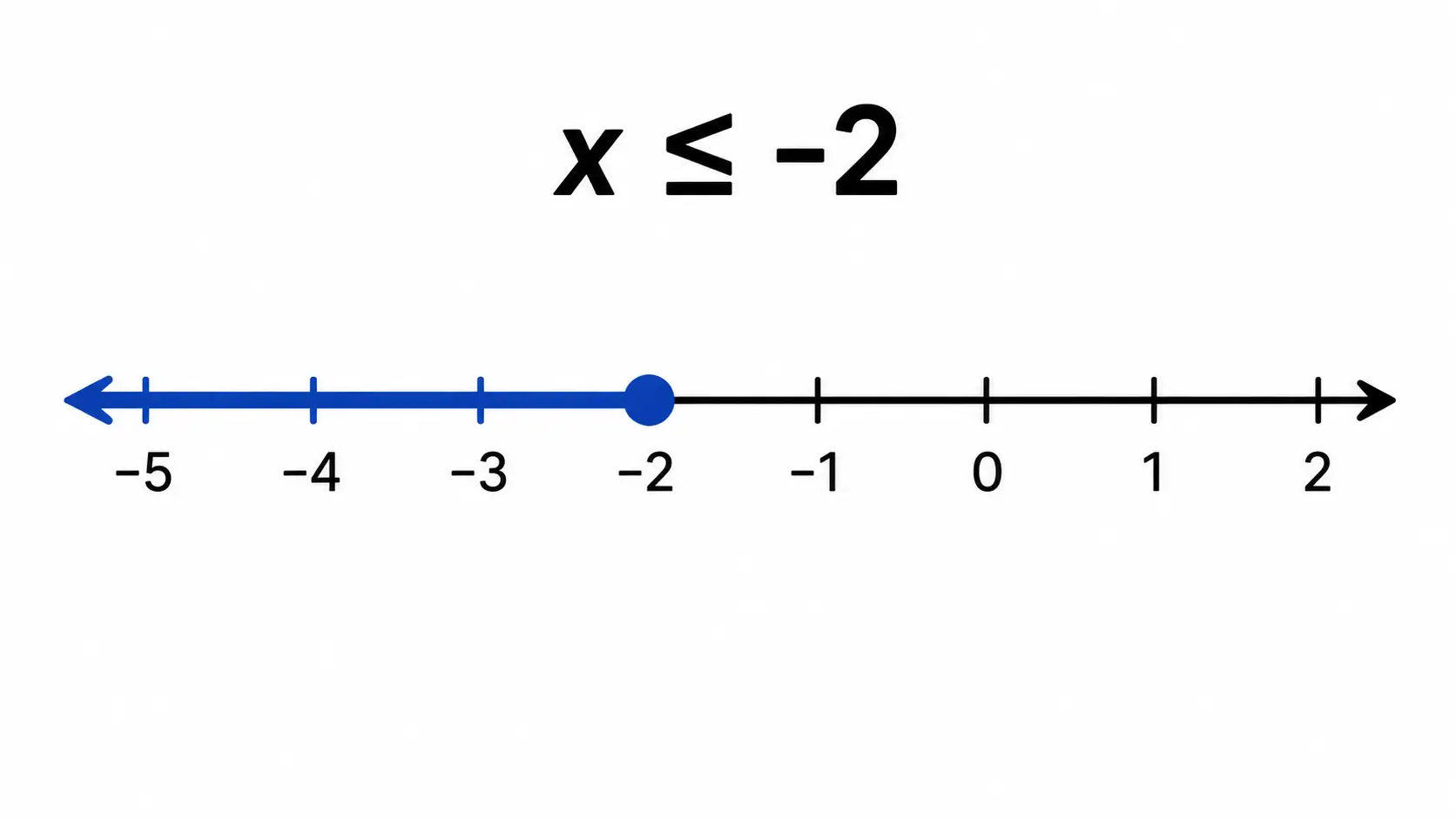
Example: x ≤ -2
This means x can be -2 or any number less than -2.
Number Line and Measurement
A number line is closely related to measurement.
Examples:
- A ruler is like a number line.
- A thermometer is like a vertical number line.
- A weighing scale uses number line ideas.
- A speedometer shows numbers in order.
- A timeline is also a type of number line.
So, number lines are used in daily life.
Number Line in Daily Life
Number lines are used in many real-life situations.
Examples:
Temperature
A thermometer shows positive and negative temperatures.
-10°C, -5°C, 0°C, 5°C, 10°C
Bank Balance
Positive numbers show money added.
Negative numbers show money spent or debt.
Elevation
Height above sea level is positive.
Depth below sea level is negative.
Timeline
Years before and after an event can be shown using a number line.
Floors in a Building
Ground floor can be considered zero.
Floors above are positive.
Basement floors are negative.
Number Line and Coordinate Geometry
The number line is the foundation of coordinate geometry.
In one dimension, a number line shows the position of a point using one number.
In two dimensions, we use two number lines:
- x-axis
- y-axis
Together they form the coordinate plane.
Number Line and Density of Numbers
The number line shows an important property:
Between any two numbers, there are infinitely many numbers.
Example:
Between 1 and 2:
1.1, 1.2, 1.25, 1.5, 1.75, 1.999, …
Between 1.1 and 1.2: 1.11, 1.12, 1.15, 1.19, …
This property is called the density of numbers.
Number Line and Graphs
Graphs are based on number lines.
For example:
A bar graph uses number scales.
A line graph uses number axes.
A coordinate graph uses x-axis and y-axis.
A distance-time graph uses number lines on both axes.
So, number line understanding is necessary for graph reading.
Number Line and Scale
A number line must have a proper scale.
A scale tells us the value of each gap.
Example:
If each gap represents 1:
0, 1, 2, 3, 4
If each gap represents 5: 0, 5, 10, 15, 20
If each gap represents 10:
0, 10, 20, 30, 40
Equal gaps must always represent equal values.
Common Mistakes While Using Number Line
Students often make these mistakes:
- Unequal spacing between numbers.
- Forgetting arrows at both ends.
- Placing negative numbers on the wrong side.
- Thinking -5 is greater than -2.
- Confusing subtraction of negative numbers.
- Not dividing equal parts properly for fractions.
- Forgetting that numbers increase from left to right.
- Marking decimals without proper scale.
- Treating distance as negative.
- Not using open and closed circles correctly in inequalities.
Important Rules of Number Line
- Numbers increase from left to right.
- Numbers decrease from right to left.
- Zero separates positive and negative numbers.
- Equal spaces show equal differences.
- Positive numbers are to the right of zero.
- Negative numbers are to the left of zero.
- The farther a positive number is from zero, the greater it is.
- The farther a negative number is from zero, the smaller it is.
- Distance is always positive.
- Every real number has a point on the number line.
Importance of Number Line in Mathematics
The number line is important because it helps us:
- Understand number order.
- Compare numbers.
- Represent positive and negative numbers.
- Perform addition and subtraction.
- Understand multiplication and division.
- Represent fractions and decimals.
- Understand rational and irrational numbers.
- Solve inequalities.
- Understand absolute value.
- Learn coordinate geometry and graphs.