


Table of Contents
Introduction
Generally saying, the word Pattern means, the way in which something happens, develops, or is done. It can be an arrangement of lines, shapes, colours, etc. as a design. It can also be a rule according to which numbers or shapes are arranged. While defining the word Pattern, the word Rule holds significant importance. So, we can say, Pattern is arrangement of something according to a rule.
When we talk of term “Patterns in Mathematics”, it is related to arrangement of numbers, shapes, objects according to a specific rule.
Number Sequences
Number Pattern or we can also say it as Number sequence, means, numbers arranged according to a specific rule. For example, 0, 1, 2, 3, 4,… is number pattern of counting numbers. Here, the rule is to add 1 every time.
Number theory is branch of Mathematics in which we study Patterns in Whole Numbers
Some of the number sequences are:
- All 1’s : 1, 1 ,1 ,1,… in which rule is 1 is repeated
- Counting Numbers : 1, 2, 3, 4, 5, 6,… in which rule is to add 1 to get the next number, 1 when added to 1 gives 2, 2 added to 1 gives 3 and so on
- Odd Numbers : 1, 3, 5, 7, 9, 11,… in which rule is to add 2 to get the next number, 1 when added to 2 gives 3, 3 when added to 2 gives 5 and so on
- Even Numbers : 2, 4, 6, 8, 10, 12,… in which rule is to add 2 to get the next number, 2 when added to 2 gives 4, 4 when added to 2 gives 6 and so on
- Triangular Numbers : 1, 3, 6, 10, 15, 21,… in which rule is to add +2 to 1, +3 to 3, +4 to 6 and so on
- Square Numbers : 1, 4, 9, 16, 25, 36,… in which rule is n ✖️ n, where n is natural number, 1 ✖️ 1 = 1, 2 ✖️ 2 = 4, 3 ✖️ 3 = 9 and so on
- Cube Numbers : 1, 8, 27, 64,… in which rule is n ✖️ n ✖️ n, where n is natural number, 1 ✖️ 1 ✖️ 1 = 1, 2 ✖️ 2 ✖️ 2 = 8, 3 ✖️ 3 ✖️ 3 = 27 and so on
- Virahanka Numbers : 1, 2, 3, 5, 8, 13, 21,…in which adding previous two numbers gives next number, 1+2=3, 2+3=5, 3+5=8, 5+8=13 and so on
- Powers of 2 : 1, 2, 4 ,8, 16, 32, 64,… in which powers of 2 are there, 20= 1, 21= 2, 22=4, 23= 8 and so on
- Powers of 3 : 1, 3, 9, 27, 81, 243,… in which powers of 3 are there, 30= 1, 31= 3, 32=9, 33= 27 and so on
Watch below videos to understand different number sequences:
Visualising Number Sequences
When pictures or images are associated with number sequences, it helps us understand number sequences in a better way.
Below are the previously discussed numbers sequences visualised through images.
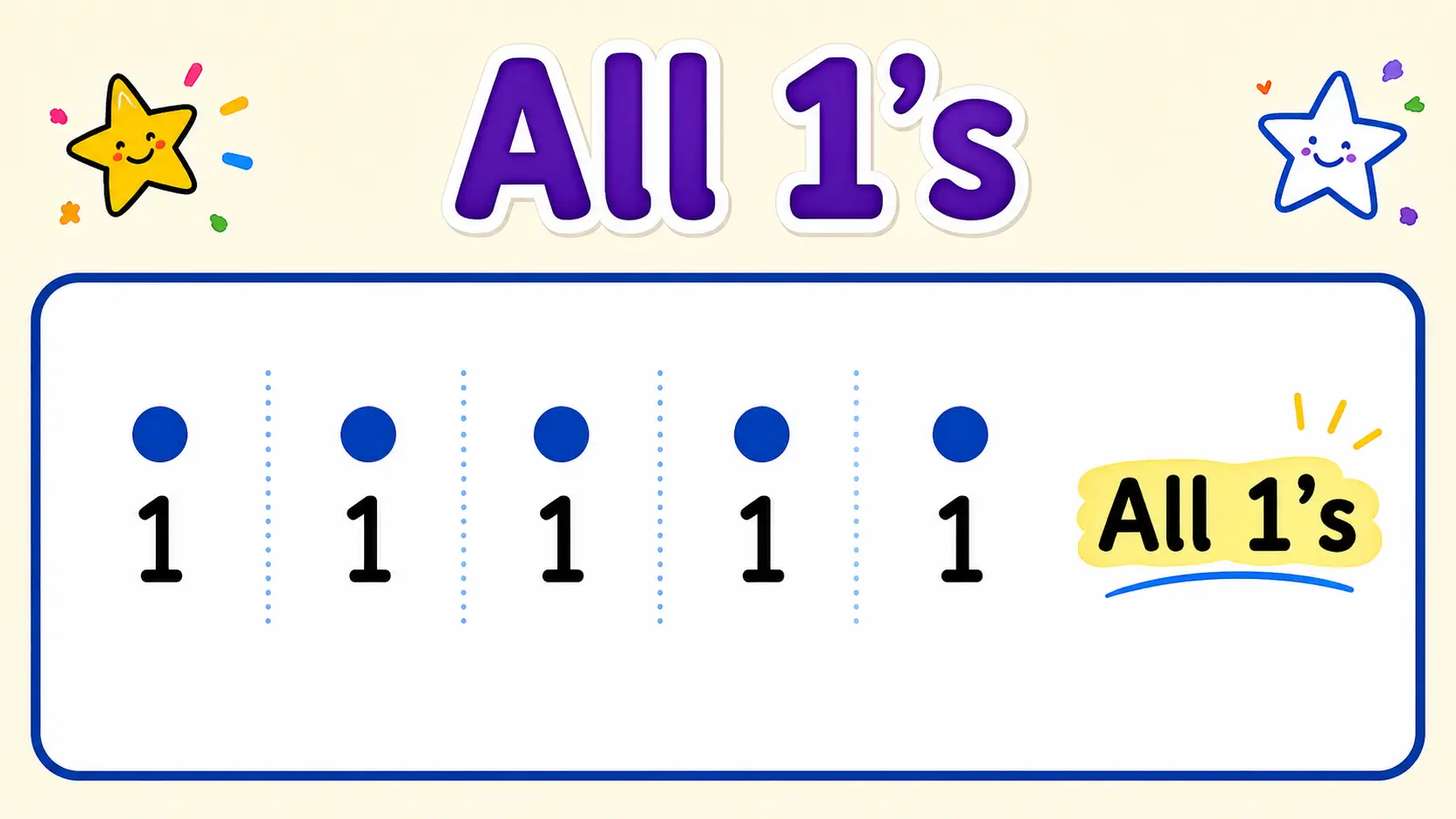
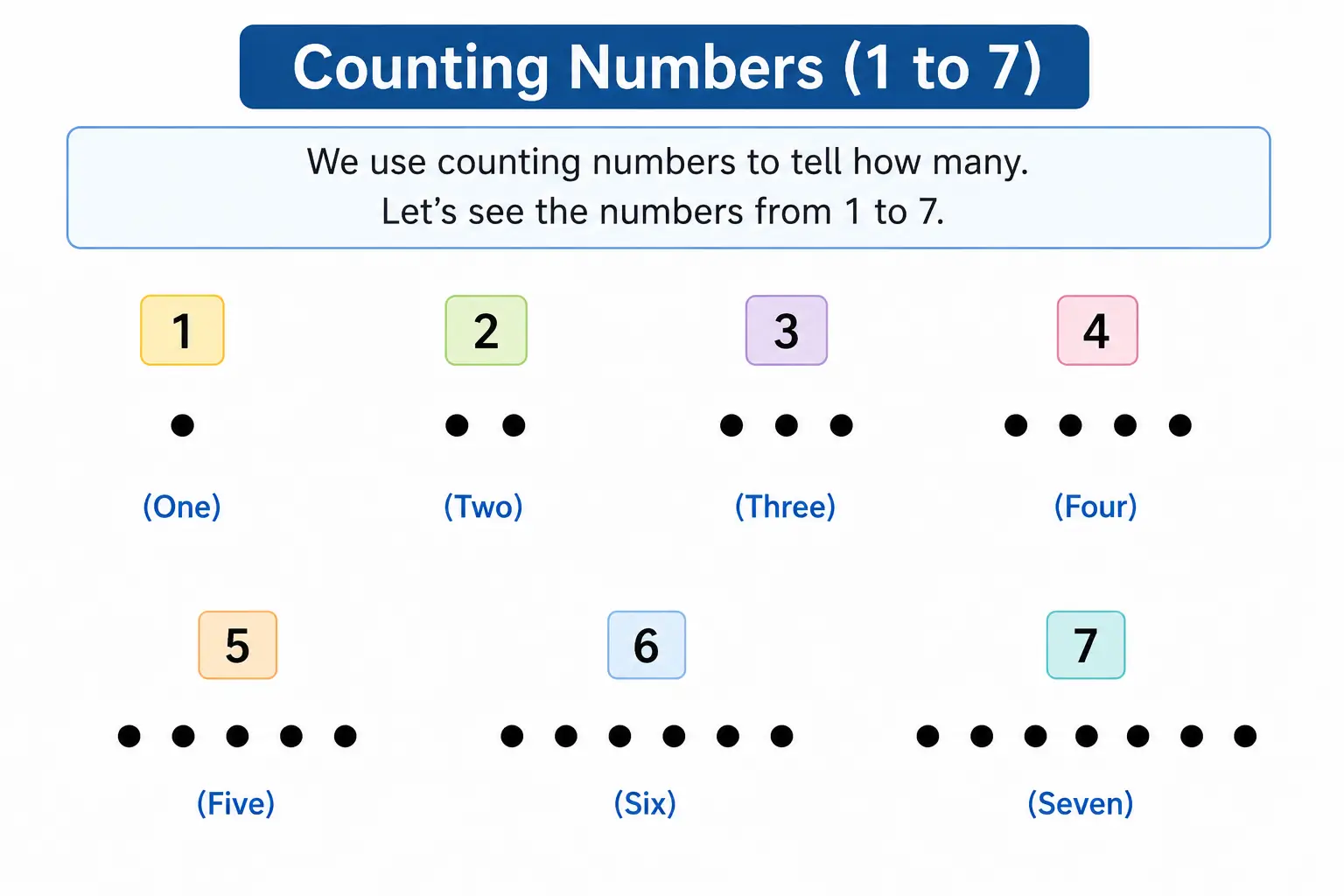
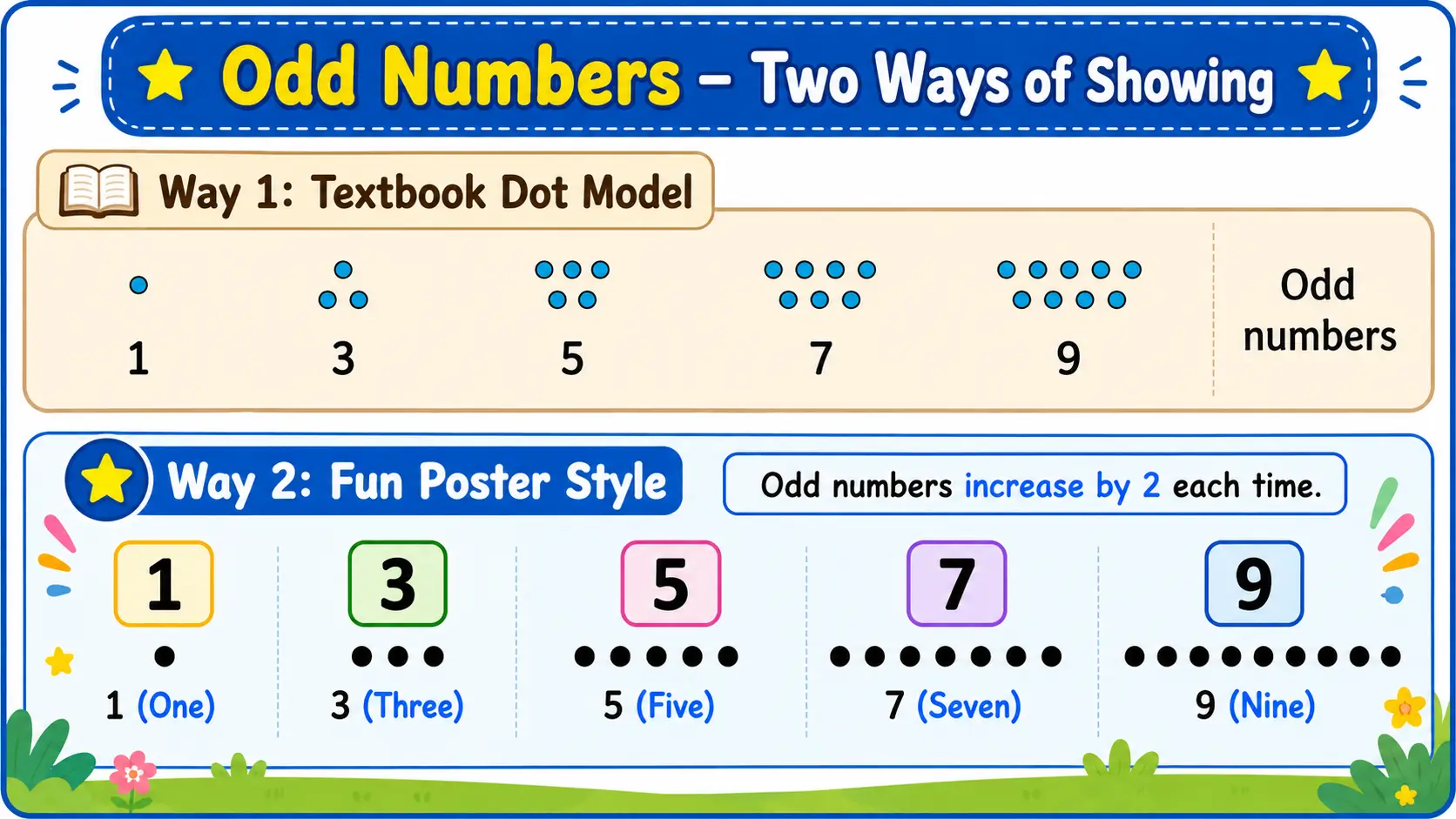
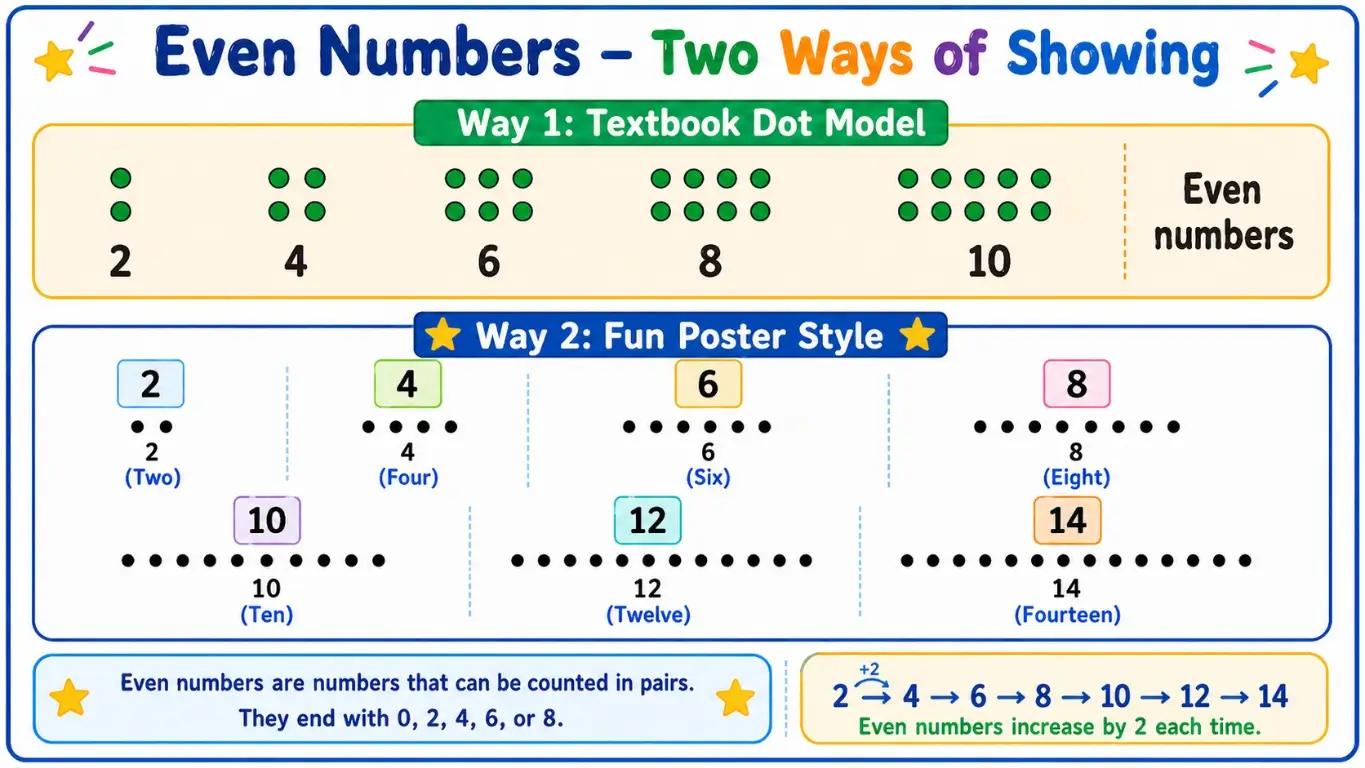
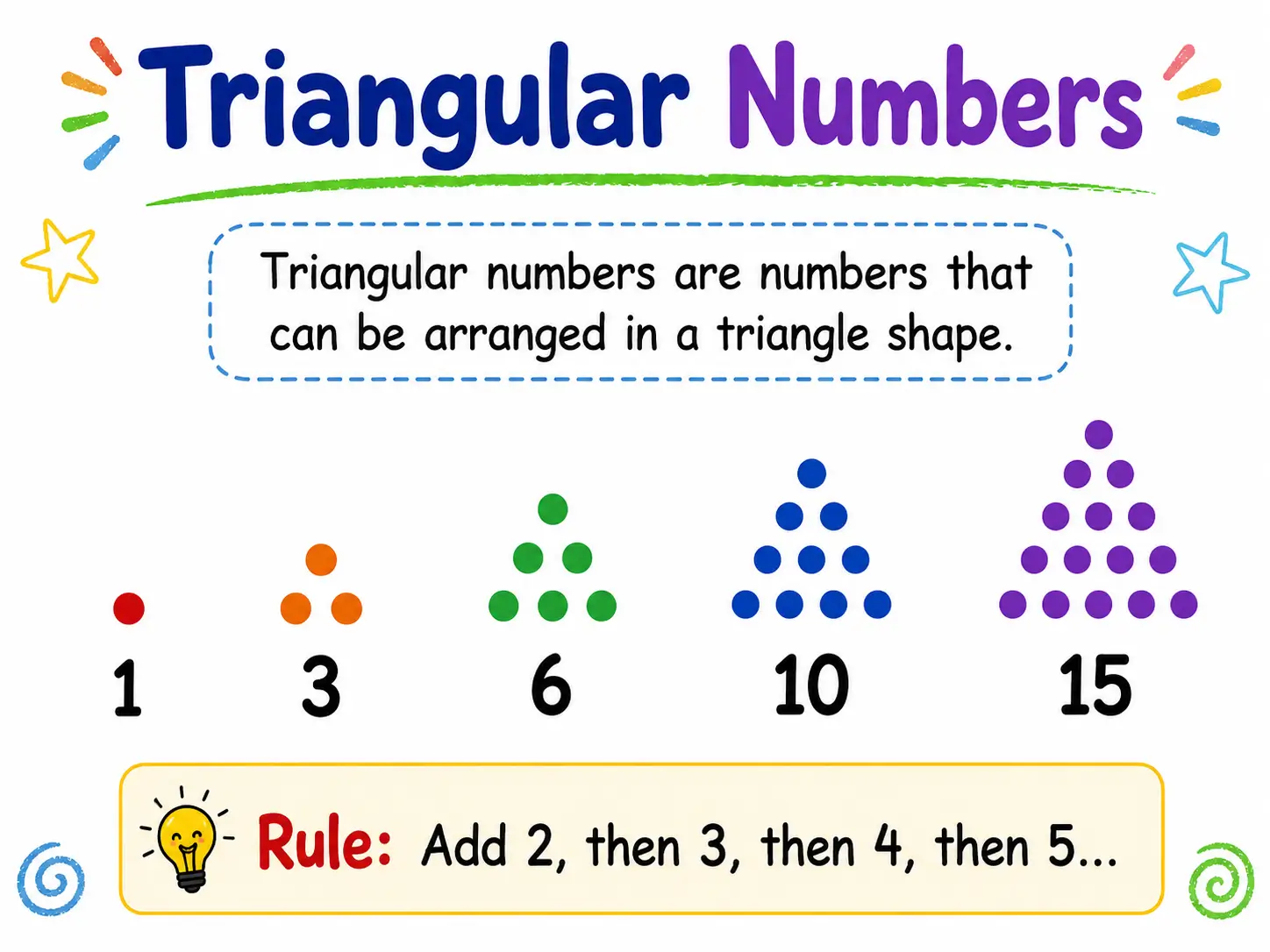
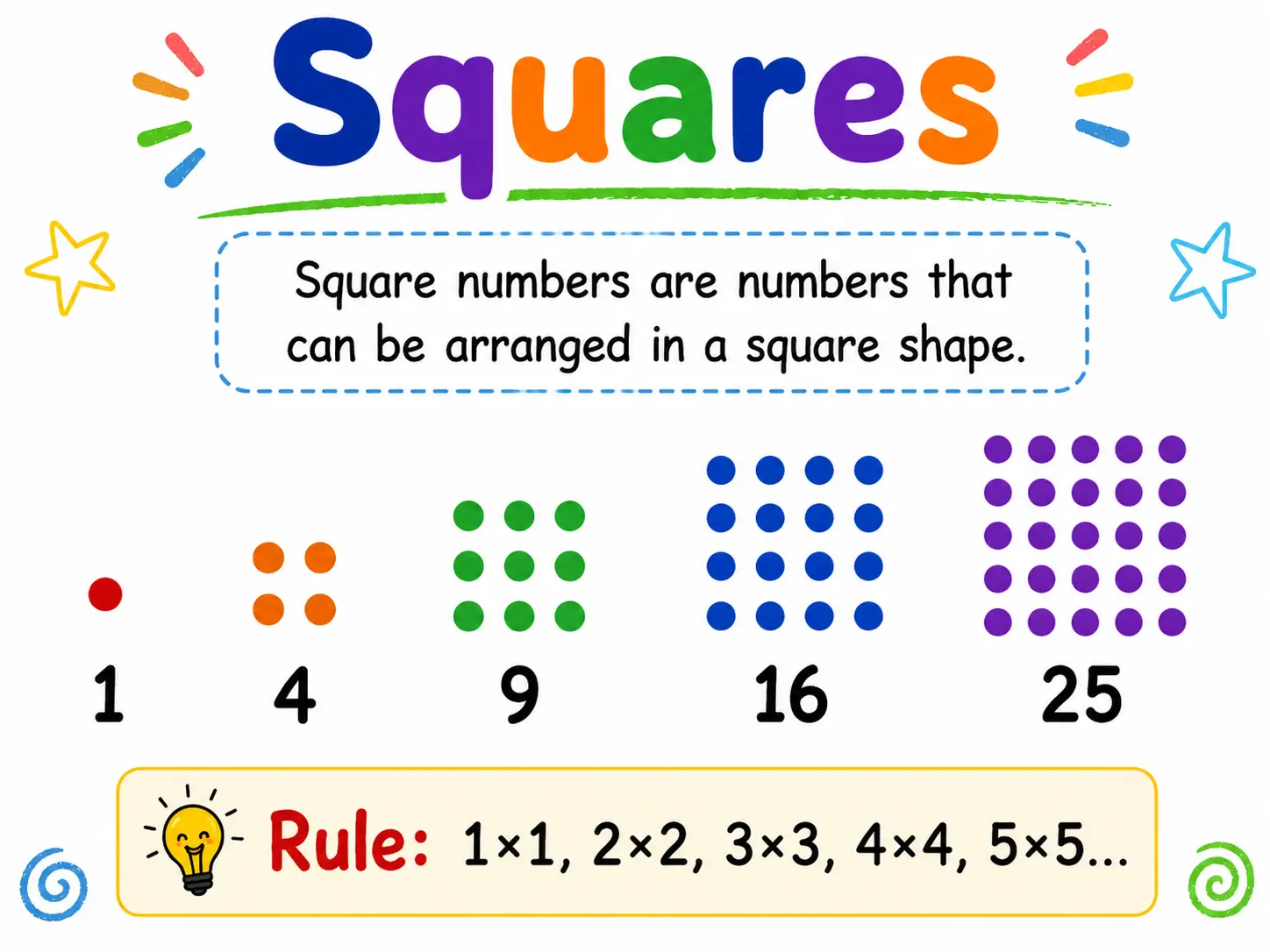
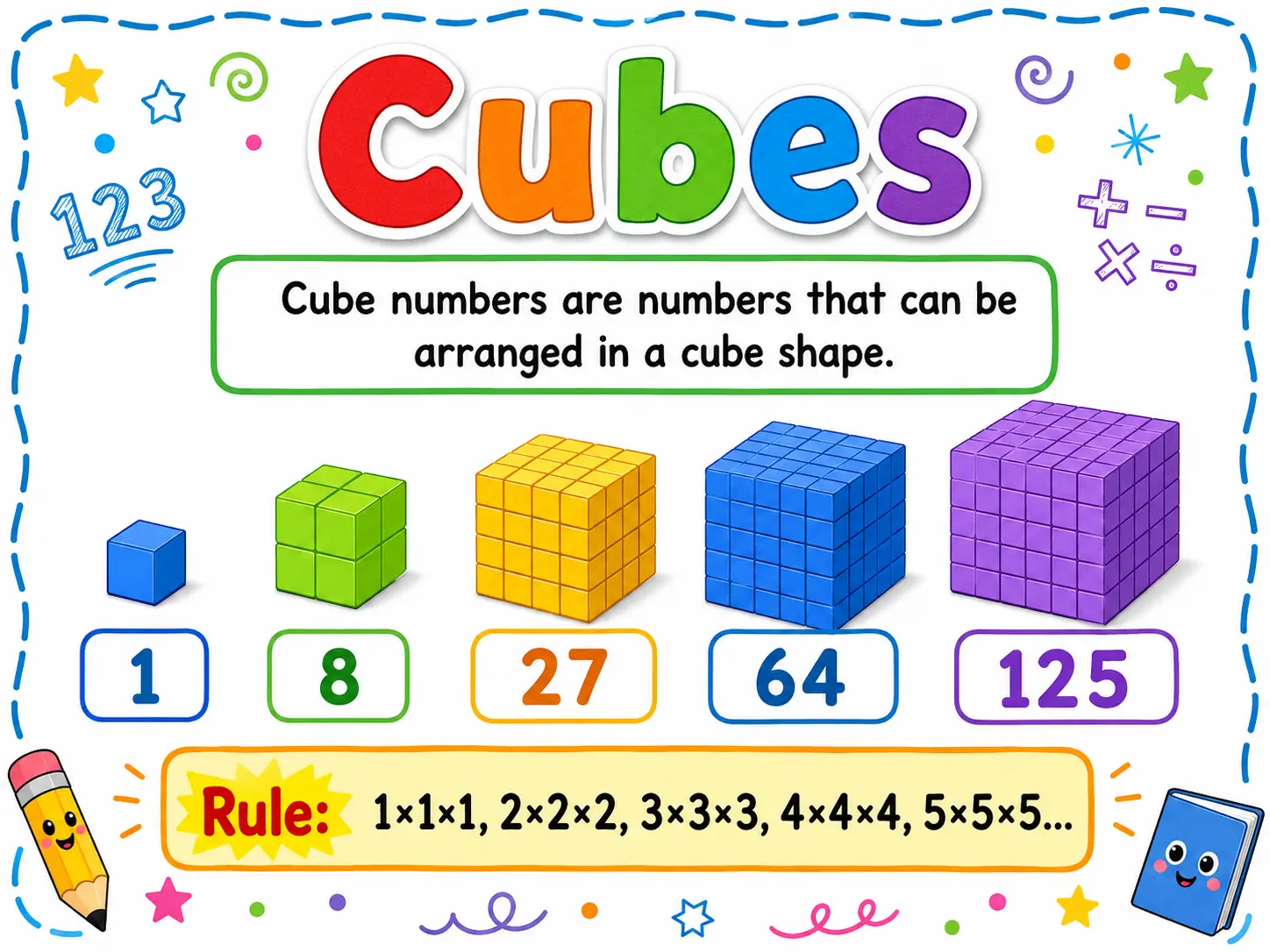
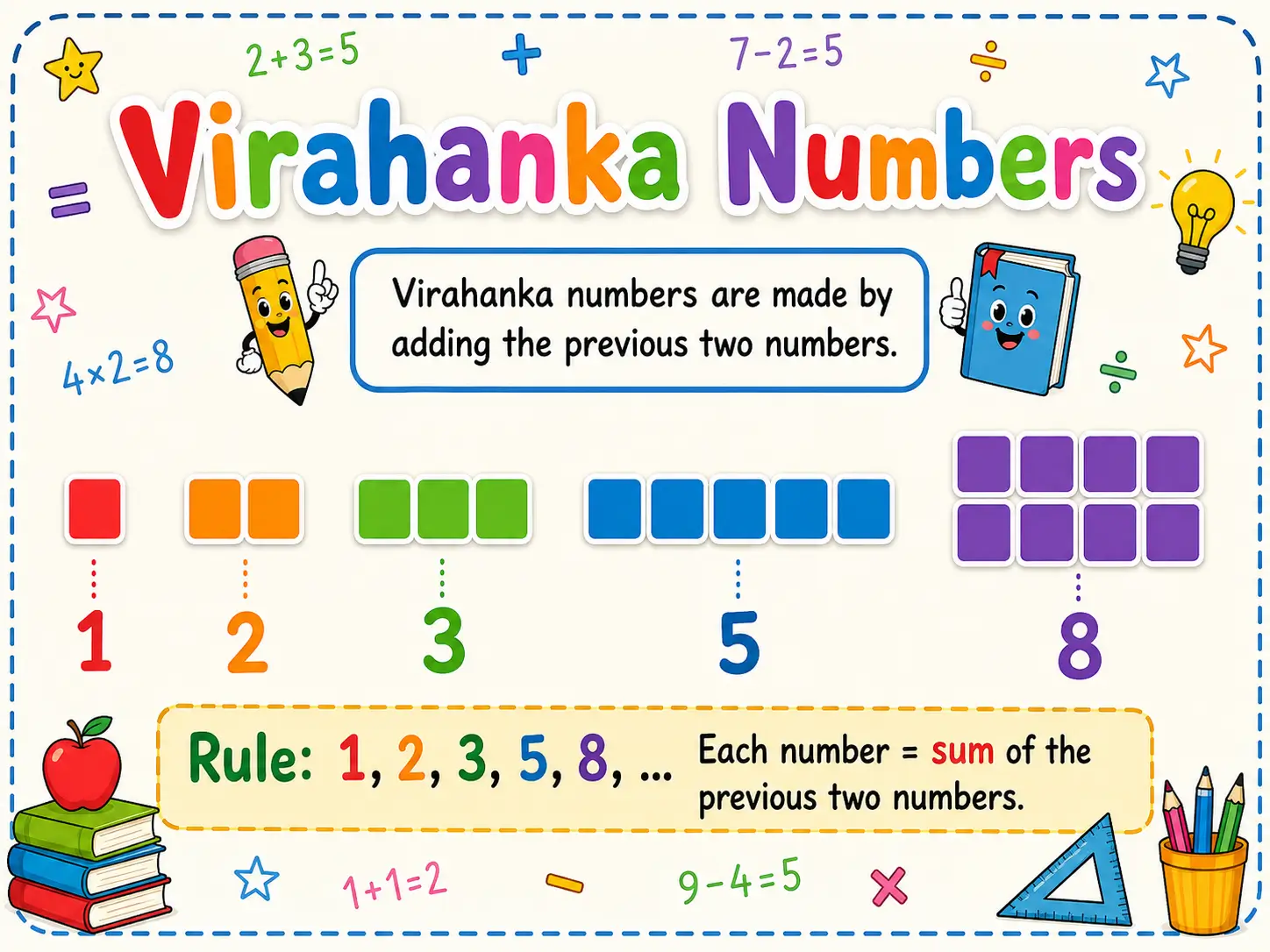
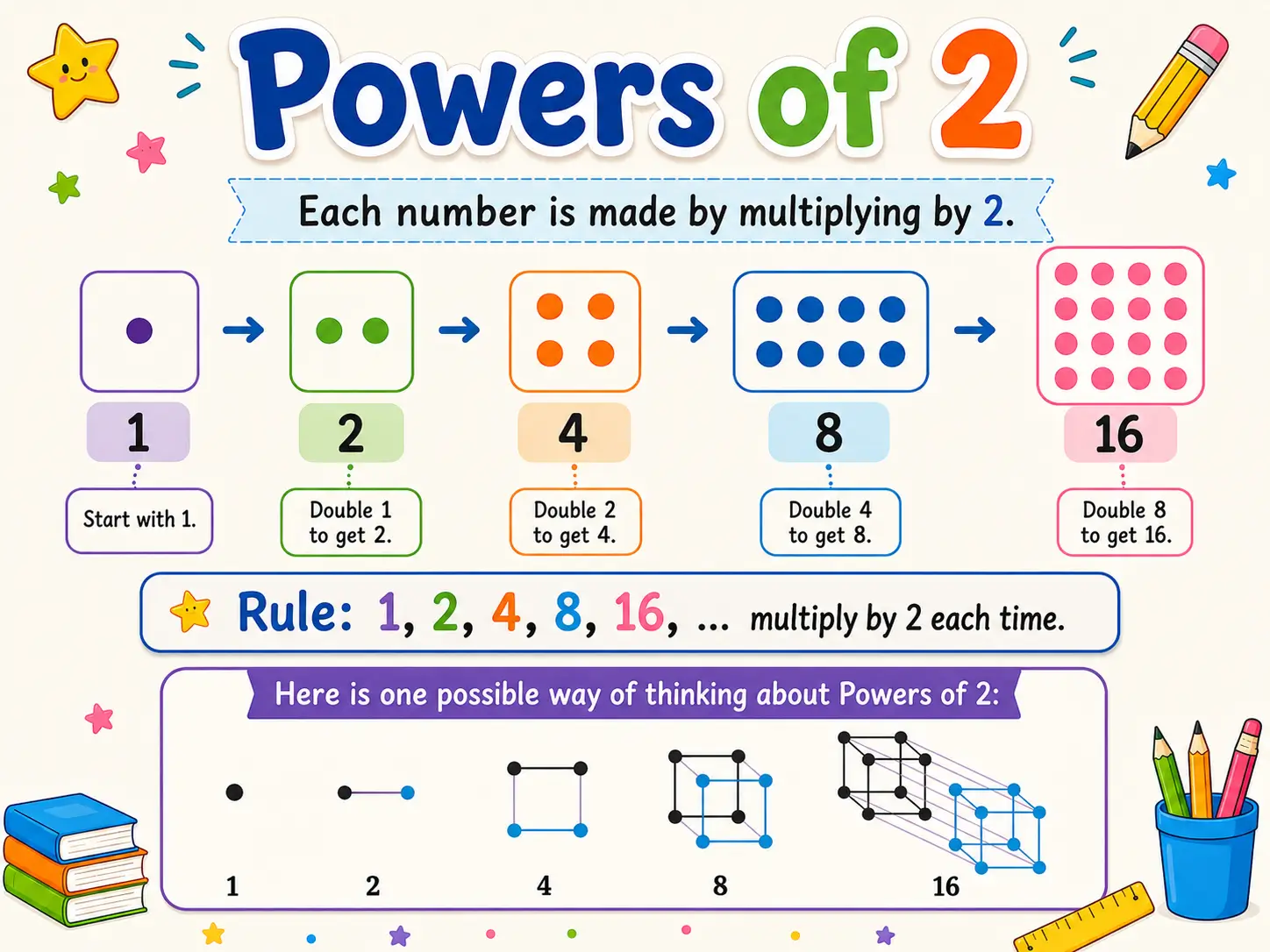
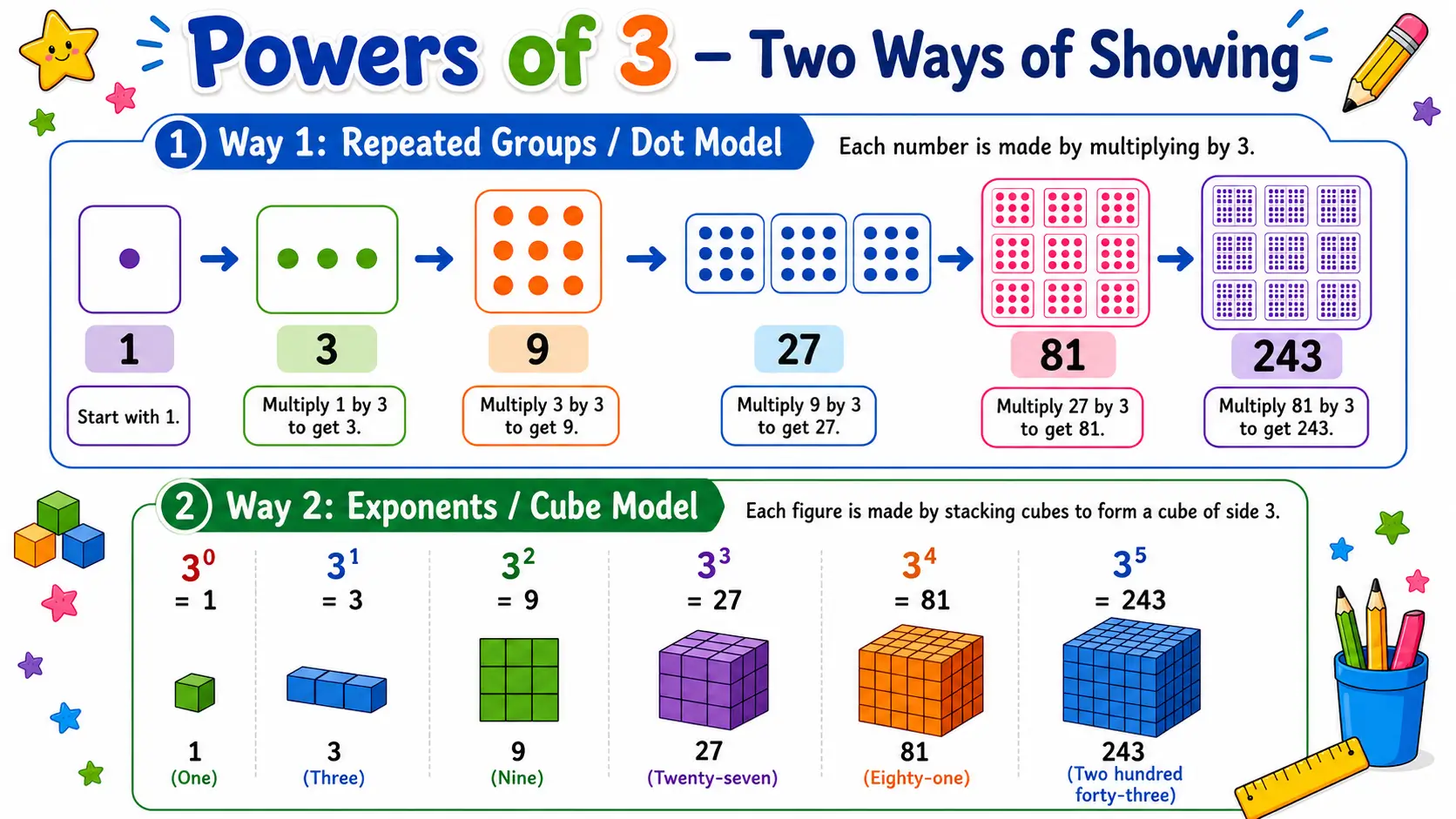
Watch below videos for explanation of visualising number sequences:
Relations among Number Sequences
There can be relations among number sequences which we discussed earlier. Watch the video below to understand.
Relation between odd and square numbers
Odd numbers and square numbers have an interesting relationship. Every square number can be obtained by adding consecutive odd numbers starting from 1.
Square Numbers as the Sum of Odd Numbers
Observe the following pattern:
| Square Number | Sum of Consecutive Odd Numbers | Result |
|---|---|---|
| 12 | 1 | 1 |
| 22 | 1 + 3 | 4 |
| 32 | 1 + 3 + 5 | 9 |
| 42 | 1 + 3 + 5 + 7 | 16 |
| 52 | 1 + 3 + 5 + 7 + 9 | 25 |
Therefore:
1 + 3 + 5 + … + (2n − 1) = n2
This means that the sum of the first n odd numbers is equal to n2.
Visual Understanding
Imagine square numbers as dots arranged in the shape of a square.
- One dot forms a 1 × 1 square.
- Adding 3 more dots forms a 2 × 2 square.
- Adding 5 more dots forms a 3 × 3 square.
- Adding 7 more dots forms a 4 × 4 square.
Each new layer contains the next odd number of dots. Therefore, consecutive odd numbers act as building blocks for square numbers.
Difference Between Consecutive Square Numbers
The difference between two consecutive square numbers is always an odd number.
| Consecutive Square Numbers | Calculation | Difference |
|---|---|---|
| 12 and 22 | 4 − 1 | 3 |
| 22 and 32 | 9 − 4 | 5 |
| 32 and 42 | 16 − 9 | 7 |
| 42 and 52 | 25 − 16 | 9 |
In general:
(n + 1)2 − n2 = 2n + 1
Since 2n + 1 is always an odd number, the difference between consecutive square numbers is always odd.
Example
Find the sum of the first six odd numbers.
1 + 3 + 5 + 7 + 9 + 11 = 36
Since 62 = 36, the sum of the first six odd numbers is 36.
Key Points
- The sum of the first n odd numbers is n2.
- To obtain the next square number, add the next odd number.
- The difference between consecutive square numbers is always odd.
Adding counting numbers up and down to get square numbers
Square numbers can also be formed by adding counting numbers in an increasing order and then adding them in a decreasing order.
Adding Counting Numbers Up and Down to Get Square Numbers
Observe the following pattern:
| Square Number | Counting Numbers Added Up and Down | Result |
|---|---|---|
| 12 | 1 | 1 |
| 22 | 1 + 2 + 1 | 4 |
| 32 | 1 + 2 + 3 + 2 + 1 | 9 |
| 42 | 1 + 2 + 3 + 4 + 3 + 2 + 1 | 16 |
| 52 | 1 + 2 + 3 + 4 + 5 + 4 + 3 + 2 + 1 | 25 |
Therefore:
1 + 2 + 3 + … + (n − 1) + n + (n − 1) + … + 3 + 2 + 1 = n2
This means that when counting numbers are added from 1 up to n and then back down from n − 1 to 1, their sum is n2.
How Does the Pattern Work?
The numbers first increase one by one until they reach the greatest number. After that, they decrease one by one until they return to 1.
- For 22, count up to 2 and then back down: 1 + 2 + 1 = 4.
- For 32, count up to 3 and then back down: 1 + 2 + 3 + 2 + 1 = 9.
- For 42, count up to 4 and then back down: 1 + 2 + 3 + 4 + 3 + 2 + 1 = 16.
The highest counting number in each arrangement tells us which number is being squared.
Why Does This Give a Square Number?
The sum of the counting numbers from 1 to n is:
1 + 2 + 3 + … + n = n(n + 1) 2
The sum of the counting numbers from 1 to n − 1 is:
1 + 2 + 3 + … + (n − 1) = n(n − 1) 2
Adding the two sums:
n(n + 1) 2 + n(n − 1) 2 = n2
= n[(n + 1) + (n − 1)] 2
= n(2n) 2 = n2
Example
Find the square number formed by counting up to 6 and then counting back down.
1 + 2 + 3 + 4 + 5 + 6 + 5 + 4 + 3 + 2 + 1
= 36 = 62
Therefore, adding counting numbers up to 6 and then back down gives the square number 36.
Key Points
- Begin with 1 and add counting numbers in increasing order.
- After reaching n, add the numbers in decreasing order from n − 1 to 1.
- The result is the square of the greatest number in the pattern.
- In general, counting up to n and back down gives n2.
Patterns in Shapes
The arrangement of shapes according to a specific rule is termed as “Patterns in Shapes”
The branch of Maths which studies Patterns in shapes is called Geometry
Shape sequences are a type of shape patterns.
Some Shape sequences are Regular Polygons, Complete Graphs, Stacked Squares, Stacked Triangles, Koch Snowflake. We will discuss them one by one below:
Regular Polygons
Firstly, a question comes to the mind that what is a polygon?
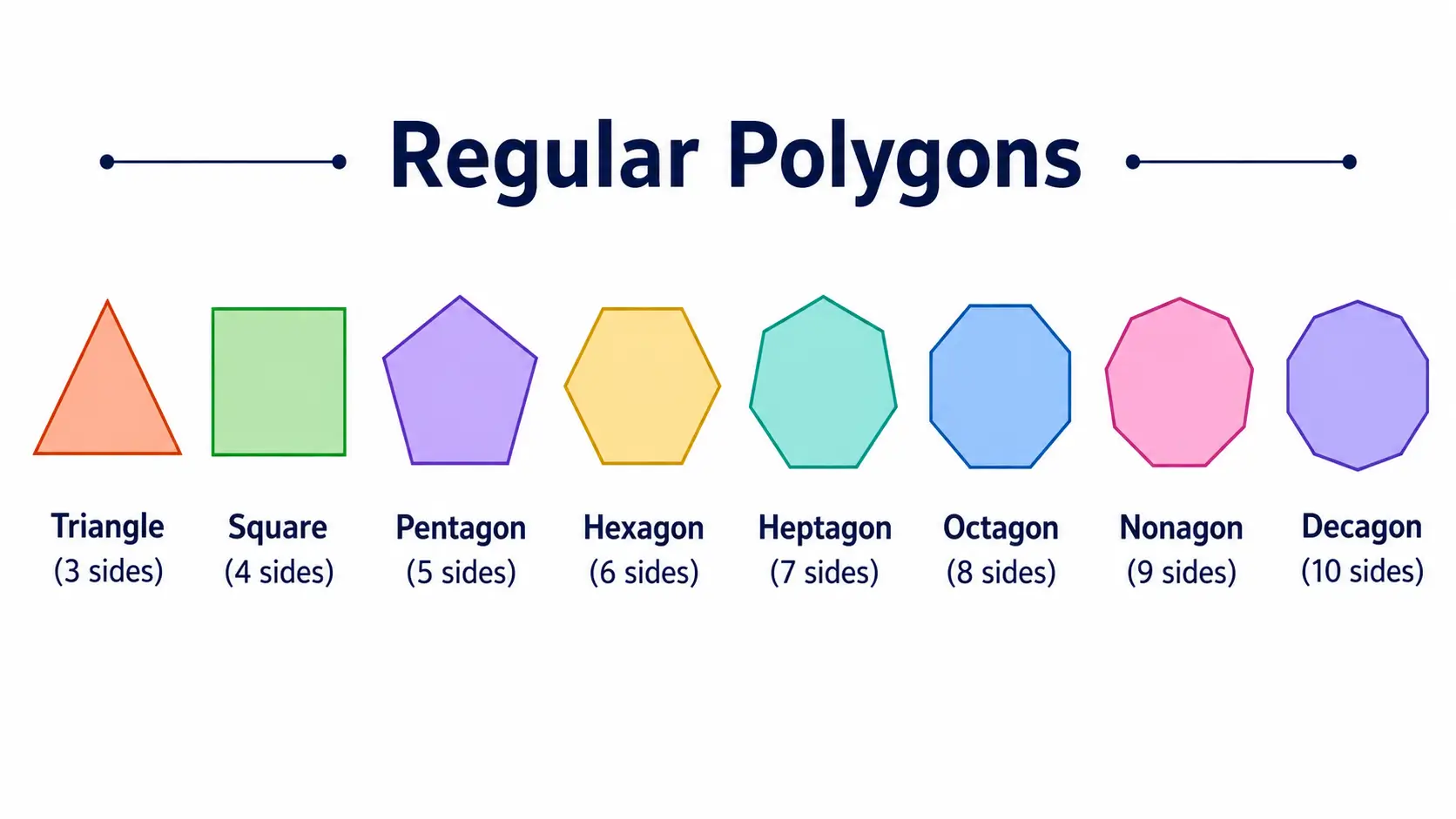
A polygon is a closed figure formed by line segments joining at their end point, example is a rectangle. But now, what is a regular polygon? A regular polygon is a polygon which has all equal sides and all equal angles, an example is a square.
Below is an image of regular polygon shape sequence
Complete Graphs
In complete graphs shape sequence, each vertex is connected to each other by an edge, we also call edge, a line segment.
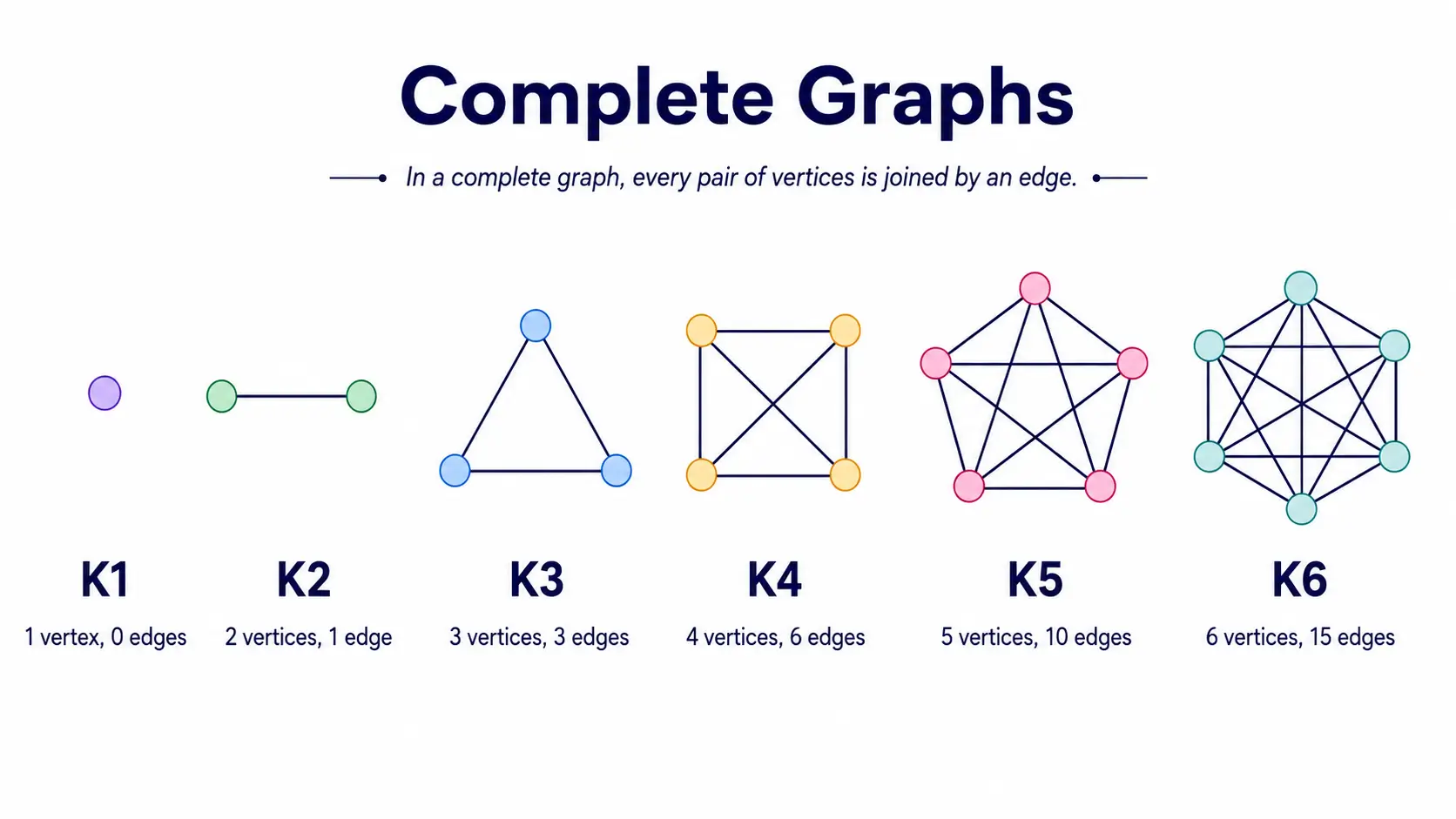
A complete graph having ‘n’ number of vertices is represented by Kn
The number of edges in a complete graph is given by the formula E = n(n − 1) 2 , where n is the number of vertices and E is the total number of edges.
Suppose if n is 4, then n(n-1) is 12 and divided by 2 gives 6 which are number of edges
Also (n-1) edges are joined to each vertex of Kn . If n is 4 then it means 3 edges are joined to each vertex of complete graph K4
Note that the edges form a number sequence which is 1, 3, 6, 10, 15… which is a triangular number sequence.
Stacked Squares
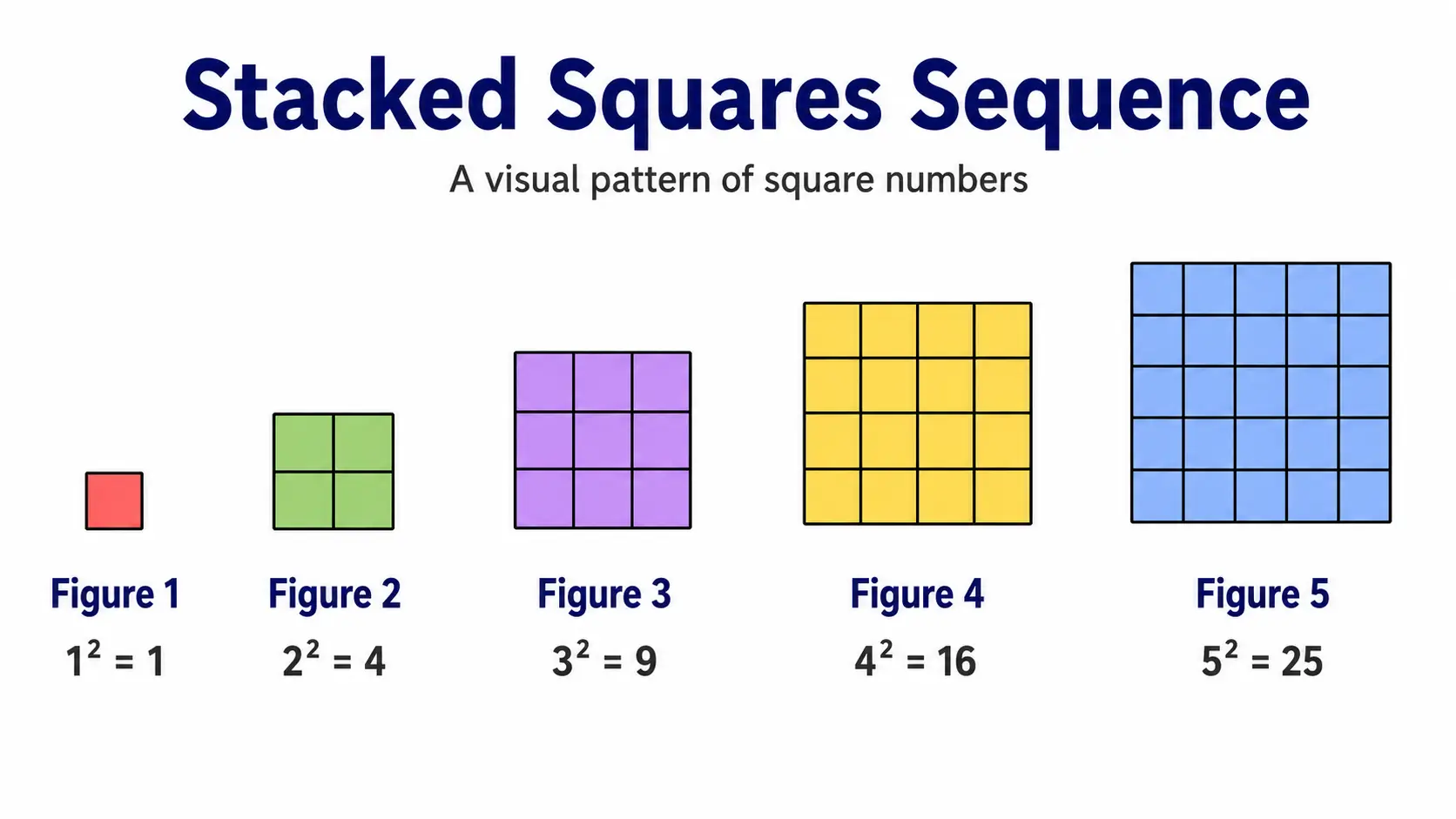
Given below is stacked squares sequence, they are called stacked square sequence because the word stacked means a lot of rows of squares are putted one over another or we can say lot of squares are stacked together.
The number sequence of number of squares in each figure as observed through below image is 1, 4, 9, 16,… which is a squared number sequence or square of counting numbers 1, 2, 3, 4,…
Stacked Triangles
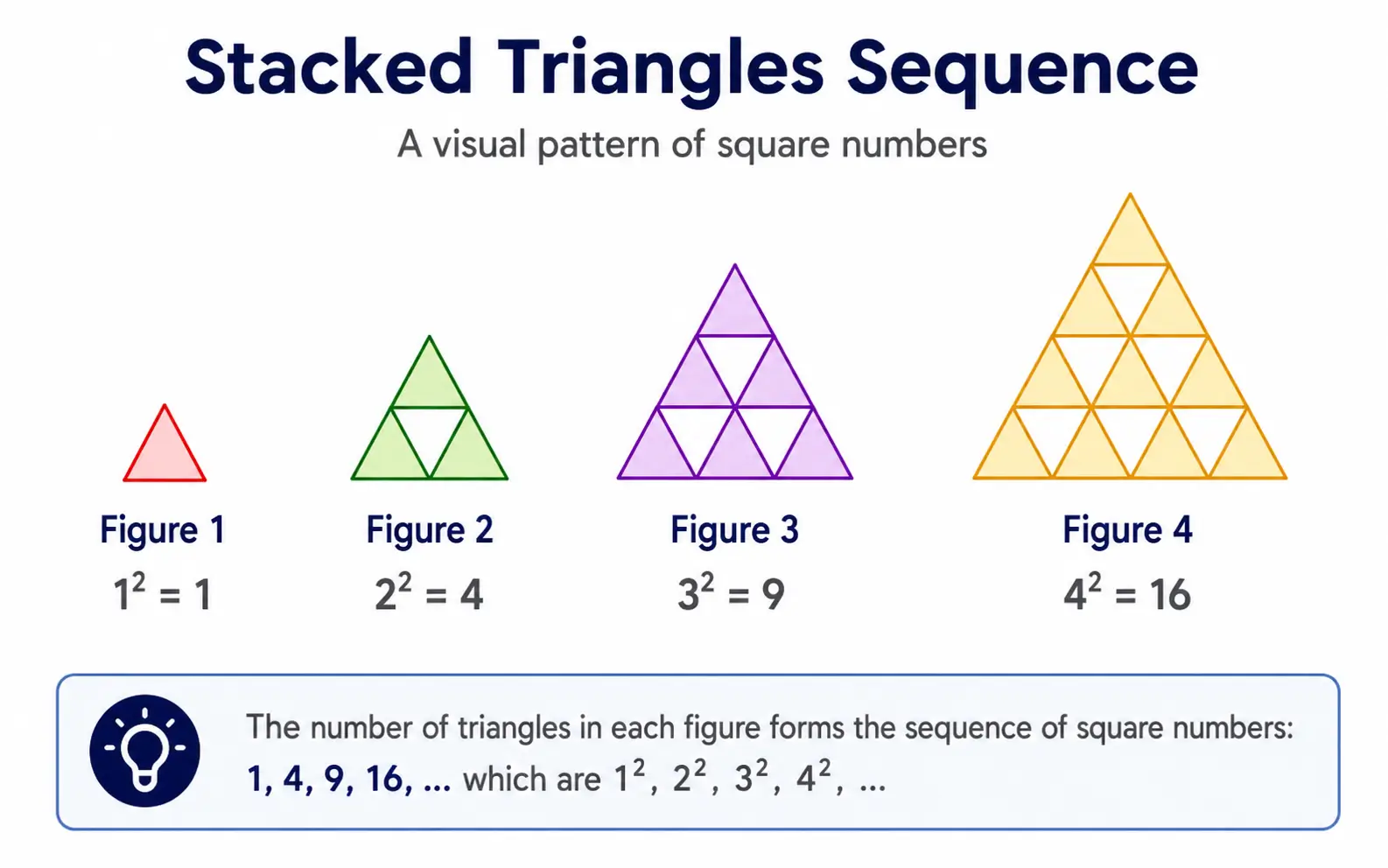
The number sequence of number of triangles in each figure as observed through below image is 1, 4, 9, 16,… which is a squared number sequence or square of counting numbers 1, 2, 3, 4,…
Koch Snowflake sequence
It is better to study Koch Snowflake sequence through below image
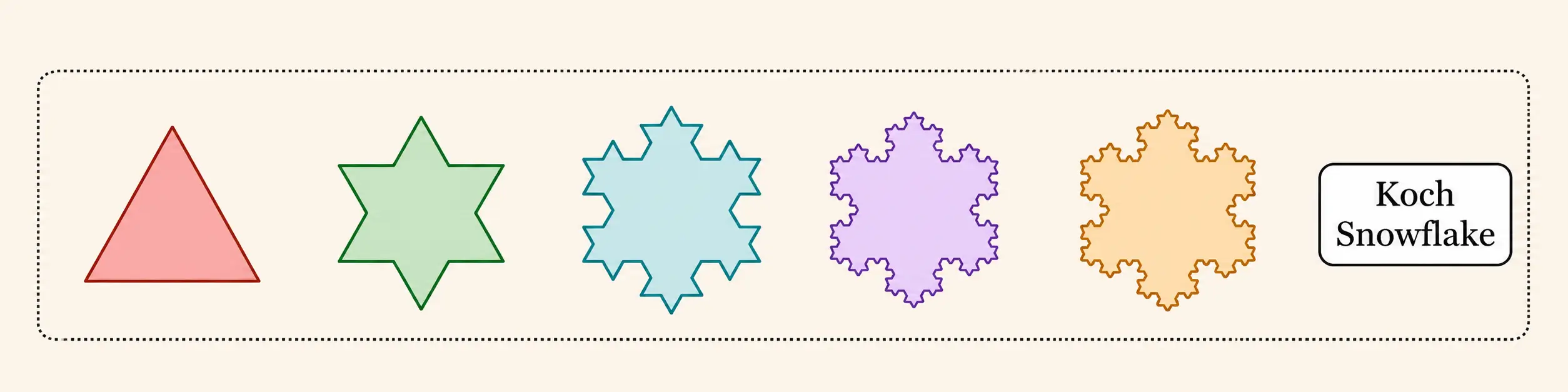
To make a Koch snowflake sequence, first we take an equilateral triangle in which all 3 sides are equal, then each side is split into 3 equal parts and the middle part is projected outward making a small triangle and the base is removed, this is done for each side of equilateral triangle. To get the next figure, we keep on repeating this process. This means that to get the next shape in Koch Snowflake, we replace each line segment ⎯ by a speed breaker as shown below

The number sequence that we get for number of line segments of Koch Snowflake is 3, 12, 48, 192,…
The number of line segment from one shape to other becomes 4 times
Length of each line segment becomes one third of previous length
Watch the below video to understand patterns in shapes like regular polygons, complete graphs, stacked squares, stacked triangles, koch snowflake.
NCERT Figure it questions solutions
Watch the below video for solved figure it out questions from NCERT book
Downloadable Resources for Patterns in Mathematics
- NCERT Book Ganita Prakash Chapter 1 :
Online Quiz for Patterns in Mathematics
- MCQs(Multiple Choice Questions) – Single Correct Answer out of 4 choices – 15 Questions
MCQ Quiz
15 MCQs • 5 Easy • 5 Medium • 5 Difficult • 20 Minutes
2. True/False – 5 Questions
True/False Quiz
5 Questions • 5 Minutes
3. Fill in the Blank – 5 Questions
Fill in the Blanks
5 Questions • 5 Minutes
4. VSA(Very Short Answer Type) – 5 Questions
Very Short Answer Questions
1. Write the next two terms of the triangular-number sequence: 1, 3, 6, 10, 15, …
Each term is found by adding the next counting number: 15 + 6 = 21 and 21 + 7 = 28.
2. Why are 1, 4, 9, 16, 25, … called square numbers?
For example, 16 dots can be arranged in 4 rows and 4 columns.
3. Which number sequence is obtained by adding pairs of consecutive triangular numbers?
For example, 1 + 3 = 4, 3 + 6 = 9 and 6 + 10 = 16.
4. How many line segments are there in the fourth stage of the Koch snowflake sequence 3, 12, 48, …?
Each stage has 4 times the number of line segments in the previous stage: 48 × 4 = 192.
5. What is the relationship between the number of sides and the number of corners in a regular polygon?
For example, a hexagon has 6 sides and 6 corners.
5. SA(Short Answer) – 5 Questions
Short Answer Type Questions
1. According to the chapter, what does mathematics try to find besides patterns? Why is this important?
2. Explain how adding consecutive odd numbers produces square numbers. Give one example.
3. State the rule of the Virahānka number sequence and find the next two terms after 21.
4. How are complete graphs related to triangular numbers? Explain using K₅.
5. Describe the rule used to make the next stage of a Koch snowflake. How does the number of line segments change?
6. LA(Long Answer) Type 5 Questions
Long Answer Type Questions
1. Explain triangular numbers with the help of a dot pattern. Also write the first six triangular numbers and describe how each new term is formed.
Triangular numbers are numbers that can be represented by arranging dots in the shape of a triangle. Each new row has one more dot than the previous row.
1 + 2 = 3
1 + 2 + 3 = 6
1 + 2 + 3 + 4 = 10
1 + 2 + 3 + 4 + 5 = 15
1 + 2 + 3 + 4 + 5 + 6 = 21
Therefore, the first six triangular numbers are 1, 3, 6, 10, 15 and 21. To obtain the next triangular number, we add the next counting number. For example, 10 + 5 = 15 and 15 + 6 = 21.
2. Show that adding counting numbers upwards and then downwards gives square numbers. Explain the pattern with at least four examples.
When counting numbers are added upwards to a greatest number and then downwards, the sum is the square of that greatest number.
1 + 2 + 1 = 4 = 2²
1 + 2 + 3 + 2 + 1 = 9 = 3²
1 + 2 + 3 + 4 + 3 + 2 + 1 = 16 = 4²
Thus, when the greatest number is n, the total is n². The numbers form a symmetrical pattern: they increase from 1 to n and then decrease back to 1.
3. Describe the important number sequences given in the chapter. Write the first five terms and the rule for any five different sequences.
Any five suitable sequences may be explained as follows:
- Counting numbers: 1, 2, 3, 4, 5, … Each term is 1 more than the previous term.
- Odd numbers: 1, 3, 5, 7, 9, … Each term is 2 more than the previous term.
- Square numbers: 1, 4, 9, 16, 25, … These are 1², 2², 3², 4² and 5².
- Cube numbers: 1, 8, 27, 64, 125, … These are 1³, 2³, 3³, 4³ and 5³.
- Powers of 2: 1, 2, 4, 8, 16, … Each term is obtained by multiplying the previous term by 2.
Other acceptable examples include even numbers, triangular numbers, Virahānka numbers and powers of 3.
4. Explain how the shape sequences of stacked squares and stacked triangles are related to square numbers.
In the stacked-squares sequence, each figure is made by arranging little squares in equal rows and columns.
2 × 2 = 4
3 × 3 = 9
4 × 4 = 16
5 × 5 = 25
Therefore, the number of little squares follows the square number sequence 1, 4, 9, 16, 25, …
In stacked triangles, the number of small triangles in the rows increases and then decreases. For example:
1 + 2 + 1 = 4
1 + 2 + 3 + 2 + 1 = 9
1 + 2 + 3 + 4 + 3 + 2 + 1 = 16
Hence, stacked triangles also produce the square-number sequence.
5. Explain the relationship between hexagonal numbers and cube numbers using the sequence 1, 7, 19, 37, 61, …
The chapter shows that when hexagonal numbers are added successively, the sums form cube numbers.
1 + 7 = 8 = 2³
1 + 7 + 19 = 27 = 3³
1 + 7 + 19 + 37 = 64 = 4³
1 + 7 + 19 + 37 + 61 = 125 = 5³
Therefore, the successive sums are 1, 8, 27, 64 and 125, which are cube numbers. This shows a beautiful relationship between a shape-based number sequence and the cube-number sequence.
7. Case Based 1 Question
Patterns in Mathematics: Case-Based MCQs
1 Case Study • 5 MCQs • 10 Minutes
Case Study: Mathematics Exhibition
A group of Class 6 students prepared a mathematics exhibition on number and shape patterns. One group arranged dots to show the square-number sequence: 1, 4, 9, 16, 25, … They observed that a larger square can be formed by adding a new border containing the next odd number of dots.
Another group drew complete graphs from K₂ to K₆. The numbers of line segments in these graphs were 1, 3, 6, 10 and 15. A third group displayed the Koch snowflake, whose numbers of line segments were 3, 12, 48 and 192.
The final group presented the Virahānka sequence: 1, 2, 3, 5, 8, 13, 21, … In this sequence, every term after the first two is obtained by adding the previous two terms.
Read the case carefully and answer the following questions.
8. Assertion Reasoning 5 Questions
Patterns in Mathematics: Assertion–Reasoning
5 Questions • 10 Minutes